Harlequin

This sativa-dominant strain is derived from some famous vintage names in genetics. Old favorites like Colombian Gold, Thai, and Swiss varieties came together to make Harlequin. A private breeding program in Switzerland was experimenting with breeding cannabis plants for hash production, and Harlequin was one of the results. The ratio is heavily tilted towards the sativa at 75% to 25%, with the influence from the Nepalese indicas also integrated into the breeding process holding their ground. 

It is relatively low in THC, but very high in CBTs to the point of being almost 2:1. The strain fell out of fashion during the years when strains found favor for their THC content, or how fast they got you high. Now that the power of CBT to treat pain and epilepsy are being rediscovered, Harlequin is enjoying a resurgence. It’s ideal to treat pain without having powerful psychoactive effects.

Harlequin has a sweet, earthy smell, a fruity taste, and a look that is stereotypically sativa-like. Buds are thick with red, orange, and purple hairs, which show as an even pattern on a whole plant. This mimics the checkered costume of classical Italian clown Harlequin, which is where the strain gets its name.

Grow Your Own Info

Even though Harlequin is a sun-loving sativa with notoriously heavy top colas, it’s also a nice indoor grow. Small, dime size flowers appear fairly early and are usually thick with crystals. 

Flowering Time: 60 to 70 days for an indoor grow, slightly longer for an outdoor crop depending on your climate zone and local weather patterns.

Yield: A dense, relatively small bud heavy with trichomes, typical of cannabis plants high in CBD. 

Grow tips: Harlequin is relatively easy to grow, and is recommended for beginners and intermediate growers. The early flowering is offset by a drawn-out curing time, which can be as long as three weeks. The tops of the plants often need extra support as they do get quite heavy. 

References:

CannabisSearch.com, “Harlequin Strain.” 2015-2016; http://www.cannabissearch.com/strains/harlequin/

Leafly.com, “Harlequin Strain Information.” From http://www.leafly.com/sativa/harlequin

Marijuana Grower’s Headquarters, “Harlequin.” By Rambo, July 24th, 2012; marijuanagrowershq.com/harlequin/

Maurice Sand [Public domain], via Wikimedia Commons: https://commons.wikimedia.org/wiki/File%3ASAND_Maurice_Masques_et_bouffons_01.jpg

The Cannabist, “Harlequin (Marijuana Review).” By Jake Browne, September 29, 2014; http://www.thecannabist.co/2014/09/29/harlequin-strain-marijuana-review-high-cbd/20055/

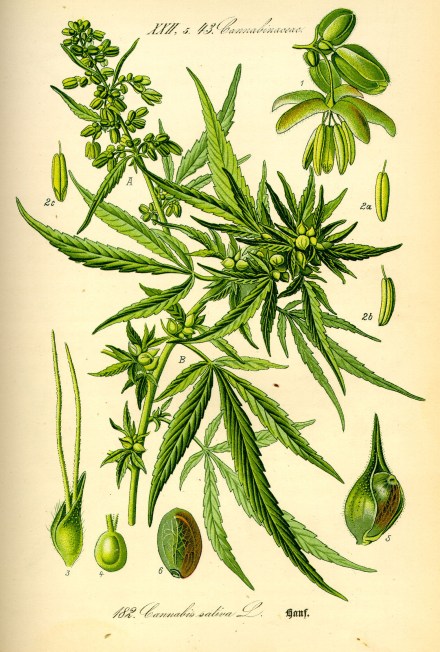
Illustration, Cannabis sativa, 1800s. Permission granted to use under GFDL by Kurt Stueber.

The Ultimate Guide to Hybrid Strains of Cannabis

Even if you’re new to the world of marijuana, you’ve probably heard names like Skunk #1, NYC Diesel and White Widow. These are just some popular examples of hybrid strains of cannabis.

Thanks to hybrids, you don’t have to choose between marijuana that is strictly indica or sativa. Today, most of the cannabis strains you encounter are of the hybrid variety. 

What is a Hybrid Strain?

There are two basic types of cannabis plants: indica and sativa.

Sativa strains are notorious for making users feel energetic and happy. Cannabis indica, on the other hand, is generally considered relaxing and mellow.

The vast majority of cannabis strains are hybrids, which means they combine the best properties of both kinds of cannabis. They are deliberately crossed by cannabis breeders to include properties of both indica and sativa strains.

A Question of Dominance

Some hybrids are balanced evenly, with a 50/50 split on both the indica and sativa side. These are called balanced hybrids. Not very many hybrid strains of cannabis are evenly divided.

Most hybrid strains of marijuana are indica dominant or sativa dominant. These types favor one side over the other and you can choose based on your personal preferences.

If you want more of an energetic, cerebral high, but with some of the added benefits of an indica to relax your body, then you would choose a sativa dominant. Those who would prefer more of a physically relaxing experience but a milder buzz would enjoy an indica dominant. 

This is not only an interesting challenge for cannabis breeders, but creates a myriad of choices for consumers with varying preferences..

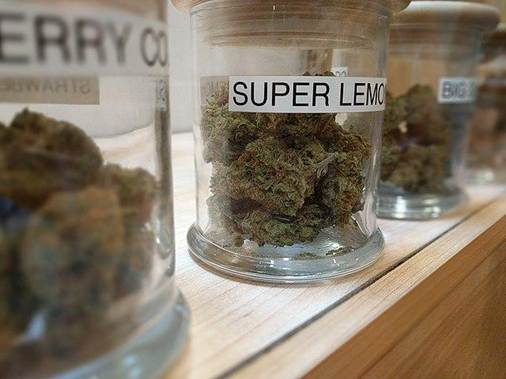
By My 420 Tours – Own work, CC BY-SA 4.0, https://commons.wikimedia.org/w/index.php?curid=69349115

The Science and the Effects of Hybrid Cannabis

The idea behind creating hybrid strains is more than just combining two different types of weed.  Anyone can put a seed in the dirt for fun. Professional breeders use complex knowledge about genetics and Mendel’s laws of inheritance to create plants that win awards and become internally renowned.

Sometimes hybrids are created to make a cannabis plant more hardy, increase production or control their size.

Cross a tall sativa with a shorter indica so the plant can grow indoors. Indica genetics will take the cerebral edge off a powerful sativa and give it a more mellow effect, or thicken the resin and make the plant more suitable for making cannabis products such as hash or budder.

There are literally thousands of different combinations and possibilities.

Canadian growers like Jordan of the Islands have a reputation for crossing tall sativas with shorter indicas. This gives the plants a tougher edge to grow outdoors in the northern rain forest or shorter height so the plants can stay indoors. The practice has resulted in some stellar hybrid marijuana strains like God Bud and Blue Shiva.

The Roots of the Hybrid Strains

photo: http://trimready.com

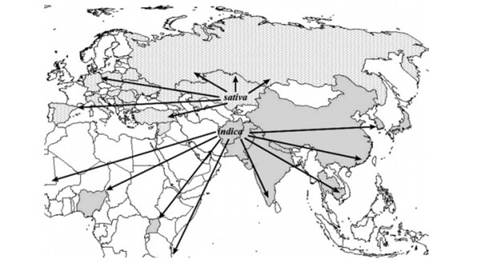
Cannabis indica and cannabis sativa trace their origins back to two major regions; modern day India and Central Asia. Marijuana aficionados from around the world have worked with these two basic elements to create thousands of modified final products.

Modern travel and tourism have also been a big contributor to the many new hybrid cannabis strains. Cannabis tourism and global seed sales are now mainstream industries and are a subculture onto themselves.

These are a few international locations that have been the most influential to the creation of the vast majority of today’s hybrid cannabis strains. 

India

The medical use of cannabis has always remained legal in India and several states recreational use used to be permitted, but the authoritarian government of Modi has restricted the practise.

The history of the cannabis plant traces some of its earliest origins to India where it was (and continues to be) celebrated in festivals, used in food, and forms an integral part of Ayurvedic medicine. Plants that originated in India are indica dominant.

Thailand

We’re not sure what drew the tourist trade here first, the breathtaking landmarks or legendary stories about the Thai Stick strain. Either way, this south Asian paradise has given the world some of the most impressive hybrids with an emphasis on sativa strains. Until a brutal crackdown that started in 2003 (courtesy of Prime Minister Thaksin) Thailand was a safe and tolerant haven for cannabis users. Today, even more so, thanks to legalization.

Hawaii

A mix of rich, volcanic soil and a humid tropical climate means an ideal growing area for potent sativa strains. Maui Wowi and Kona Gold are just two of many famous plants that trace their ancestry back to Hawaii and the surrounding islands. Many of the oldest strains that have been historically cultivated on these islands have been lost or gone extinct. Others have simply been pushed out by foreign imports.

Mexico

“I got the plug on Oaxaca.”

The lyrics in Childish Gambino’s song, “This is America” contain a reference to the state of Oaxaca in Mexico’s southernmost region in regards to drug trafficking. Mexico’s association with marijuana is deeply ingrained in North American pop culture. The sunny slopes of Mexico are ideal for sativa dominant hybrid strains, and plants from south of the border include famous names like Acapulco Gold and Mexican Sativa. Mexico is ahead of the curve when it comes to legalizing medicinal marijuana and CBD, but the cartels still use cannabis as a cash cow.

Afghanistan

The indica side of the marijuana hybrid strain has its earliest origins in Afghanistan. The Kush family of marijuana strains, a group of hybrids with an indica dominant lineage, traces its history here. Legend has it this is also where the first varieties of hashish were developed, which is likely given these varieties are heavy in resin.

Consuming Hybrid Strains of Marijuana

Yet another great thing about hybrids is their versatility. You don’t have to choose based on effects alone. Modern breeders have created varieties that taste, smell, smoke, vaporize or cook exactly the way you want.

Whatever your preference, from advanced vaporizers to that classic hand-rolled joint, there’s a type of cannabis hybrid for you. Other forms of cannabis that are currently available include extracts and oils along with a wide variety of edible products.

Medical users that need to be discreet but also require frequent use and quick results can use their hybrid of choice with a small portable vaporizer. Those who are handy in the kitchen can either buy cannabis-infused cooking oil or follow a handy recipe to make their own.

The Most Popular Hybrid Strains of Cannabis

Some of the most notorious hybrid strains of cannabis are associated with interesting urban legends. Many notable hybrids are attributed to the work of modern breeding companies and have won global awards. They are famous as ancestors of other types of marijuana, leading to a whole new generation of strains.

Occasionally the names of the original breeders and exact genetic background have been lost to the ages. Some strains of hybrid cannabis become so popular and prevalent that their genetics essentially become part of the public domain.

Here are a few interesting stories that you might hear or share at the local Compassion Club. The following strains are famous for their notable pedigree, appearances in popular culture and their contribution to other modern strains.

White Widow

An indica-dominant strain from India’s cannabis cradle was crossed with a potent Brazilian sativa, and the result was the iconic White Widow. This hybrid strain was bred in the Netherlands more than 20 years ago with from plants had origins in the Kerala Mountains of southern India.

The other “whites” like White Rhino, for example, have a similar lineage. The White Widow shines with a thick layer of frosty, sticky trichomes, hence its name. The high is energetic and sustaining but also has a pleasant relaxing effect, with a 60/40 balance that’s heavy on the indica.

Skunk #1

Skunk #1 could be one of the first strains to be bred and grown on a professional level, the genesis of what would become a billion dollar industry. It was so well-known and widely consumed that virtually all types of cannabis were simply referred to as “skunk” back in the 1970s and early 1980s. The strain itself was often known only as #1, which was specific enough given its massive popularity and notorious aroma.

A hybrid originally bred by the Dutch company Soma Seeds the 1970s, Skunk #1 hovers in the neighborhood of 65/35 indica dominant. Skunk mixes the best of several strains from all over the world, including Thai, Afghani and Mexican, but it’s exact origins and family tree are unknown.

Jack Herer

This is a name you’ve heard spoken with reverence in any community that consumes and uses the cannabis plant. Jack Herer is a hybrid named after the author of a book called The Emperor Wears No Clothes which is a comprehensive collection of myths, history and facts about cannabis. Like the book, the strain is an ideal choice for those that are not yet familiar with cannabis but would like to learn more.

Jack Herer is another creation from across the pond, this time from renowned breeder Sensi Seeds based in the United Kingdom. It’s one of the few truly balanced hybrid strains of cannabis with an even 50/50 in terms of sativa versus indica effects. The Dutch authorities have acknowledged its medical uses and the strain has won several awards and competitions.

OG Kush

A lasting testament to the brilliant growers and breeders of California, the myriad of choices with “Kush” in the name can be traced back to this famous strain. Many in the current industry compare its modern influence to the vintage Skunk #1 of the bygone hippie days, especially in the sense that it lent its name to so many other strains and even grew to be another word for weed itself.

Legend has it that the original breeders were based out of Florida, then moved their operations to Los Angeles in the 1990s. OG Kush appeared on the market in 1995 before taking the cannabis world by storm at the turn of the century. Other famous Kush names include Bubba and Lemon. Virtually all varieties of Kush are known for being close to balanced, with a slight favoritism towards the sativa side at about 60/40.

Pineapple Express

Made famous by the film of the same name, Pineapple Express was already one of the more popular hybrid strains in Holland before it appeared on the silver screen. The name itself is a clever callback to the famous parent plants, with Hawaiian on the sativa side and Trainwreck on the indica side.

The original breeders are unknown, but the folks at Barney’s Farm in Amsterdam currently offer an auto-flowering variety. Although the combination is not far from a balanced hybrid at 60/40, this strain is recognized for its energetic and long lasting high which which is often associated with stronger sativas. It has a distinctively fruity taste and smell.

Juicy Fruit

Another significant contribution to cannabis culture from Sensi Seeds, Juicy Fruit, a.k.a. Fruity Juice, is the product of two heavy hitters. This hybrid strain is the product of a classic Thai sativa and an old-school Afghani indica. It’s very close to a balanced hybrid like its compatriot Jack Herer, but leans slightly more to the sativa side with a 55/45 split.

The story of how Sensi Seeds perfected this particular plant is an adventure that literally took decades. The plants were difficult to isolate and finally breed into a plant that could grow under almost any conditions and present such a typical example of both parents. The exotic taste and smell recall this hybrid strain’s exotic heritage.

Himalayan Gold

The Kashmiri Mountains of Nepal and Northern India are home to some of the oldest cannabis genetics in the world. India is home to the indica variety and Nepal has contributed to the sativa side. It makes logical sense that this geographical area would be the first to combine the two.

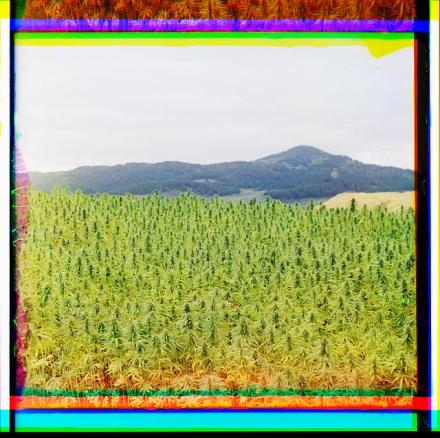
Sonmarg Valley in Kashmir, By Biswarup Bhattacharjee – Own work, CC BY-SA 4.0, https://commons.wikimedia.org/w/index.php?curid=49795885

Nobody is sure who succeeded first, but we do know that a strain called Himalayan Gold was making headway into cannabis culture as early as the 1960s. Various companies have bred different versions that include some feminized varieties.

The indica side of Himalayan Gold is the dominant influence at 60/40, but it can grow to sativa size, about five feet, if it’s grown outdoors.

NYC Diesel

This hybrid strain is also known as Soma Sour Diesel, a reference to the breeder that created the strain. Amsterdam based Soma Sacred Seeds currently sells the classic version of this now-famous strain. It has won nine Cannabis Cup awards, two of which have been first-place showings.

NYC Diesel is a what happens when modern cannabis breeding goes truly international. It was originally developed in New York, a cross between a classic Mexican sativa and an Afghani indica, touched by every corner of the planet. The strain is on the sativa-dominant side at 60/40 and is known for a distinctive fruity smell.

God Bud

God Bud distinguished the breeders of Canada’s West Coast as some of the best in the world when the practice was still fairly new north of the border. It was the flagship strain of the original developer, BC Bud Depot, which also developed strains like Blue Dream and Girl Scout Cookies.

God Bud is hard to find in its pure form today, but is the basis for several of their other notable hybrid cannabis strains. The genetics are a mix of Hawaiian sativas and some of South Asia’s most powerful indicas, making this an indica dominant hybrid. This is one of the less-balanced entries on our list, with a 75/25 division. 

Thai Lights

You’ve also heard this cannabis variety referred to as Thai Stick, another famous classic that dates from the hippie days. This sativa dominant hybrid strain is only available through certain Canadian seed banks.

The exact genetics come from the mountains of northeastern Thailand, an area known for its sativas, and the notorious indica-dominant hybrid strain Northern Lights.

The plant is close to balanced at 60/40 favoring the indica side. Like most plants that come from Canadian companies, the plant is designed to grow indoors and does well in smaller spaces.

Are Marijuana Hybrids Right for You?

Browsing the many different types of cannabis strains and finding the right one for you can feel overwhelming.

Do you need to stay focused while medicating? Choose a hybrid that’s indica dominant but with a strong sativa pedigree.

Are you using cannabis to relax after work but still want to stay active? A hybrid strain of marijuana that favors the sativa side is an ideal choice.  

Are you looking for something can combines a benefit like pain relief with a happy, social feeling? Try a balanced hybrid strain that combines both recreational and medical effects.

Consider discretion, safety and security when choosing both your ingestion method and your preferred hybrid strain of cannabis. Take your time and enjoy everything hybrids can offer.

Measuring Marijuana

We’ve all heard expressions like dime bag, eyeballing it, or pre-rolls, but what does that actually mean? How much is a gram of marijuana? How much is an ounce of weed? Not only how much should I spend, but what does that amount actually look like?

Now that cannabis consumption has become a part of the economic mainstream as a publicly traded commodity, we can stop talking in funny codes and obscure slang words to express amounts and prices. If you can buy weed stocks, you can follow your investment using common weights and measurements.

These are questions that consumers ask about the products they buy and it’s time to provide some answers.

How Much THC? Strong, Medium, and Mild Levels

These days there are so many different types of cannabis available in just as many forms that weight is no longer the deciding factor. THC level or growing method, like organic versus hydrophobic, can also determine the price. Cannabis laws still vary widely between countries and regions, which also affects prices.

An interesting example of how this works is the difference between the price of cannabis grown indoors instead of outdoors. Indoor grows were developed as a response to the need for stealth and secrecy, and take considerably more capital and labour to construct. Therefore a type of cannabis grown indoors is generally priced at a more expensive level than outdoor strains of the same weight.

Growing a crop using hydroponics results in a crop with a higher than average THC level. Strains of marijuana with a higher THC level are more costly than weaker strains. Concentrates are sold in smaller units but are often much stronger than buds or edible products.

Another new factor today is the growing popularity of CBD. When buying for CBD content as opposed to THC levels, prices tend to change. CBD is still a fairly new phenomenon and is almost exclusively placed in the medical marijuana category. It is often specially produced by only a few dedicated growers.   

How Much Cannabis Is That, Anyway?

Marijuana is typically sold according to weight, in either grams or ounces. We’re not sure how the metric units got mixed up with imperial ones, but it might have something to do with the size of a kilogram.

Measurements based on smaller, Imperial standards are more portable. A full kilo, which is 1000 grams or more than two pounds, might work out to a small hay bale. Remember, this is when your smuggling ability was a factor in buying and selling cannabis.  Now that you can buy legal marijuana of course, it’s a different ball game.

Today, weights follow the same tradition. Cannabis sales start in grams and them move into Imperial measurements. You’ve heard this expressions before. Each of them refers to an ounce as the default unit of measurement.

There are several different ways to determine how much a gram is if you’re not comfortable making an estimate and you don’t have a scale. Several free apps are available that can turn your smartphone into a scale so you don’t have to guess anymore.

Check the internet for simple scales you can build at home with little more than a few common pieces of office supplies. Another handy life hack is to keep in mind that a cap from a water or soda bottle typically holds a gram of weed.

Here’s a short glossary of the most common expressions.

  • Gram. The smallest unit of measurement in which cannabis is sold. Think of two small joints or one fairly fat one, and that’s how much a gram of marijuana looks like.
  • 2 grams. Dispensaries that sell cannabis online in Canada and the United States measure in two gram units. Actual weed prices vary from province to province and state to state. 
  • Eighth. Literally an eighth of an ounce, or three and a half grams. This size is very commonly purchased and the media often uses the “eighth” and the gram measurement as a frame of reference.  
  • Quarter.  Seven grams, or a quarter of an ounce. If you cook with your cannabis, you are likely buy in larger sizes like “the quarter”. This is the minimum amount required to start cooking budder and other cannabis-infused recipes.
  • Half. Also referred to as a “half O”, this size is often associated with both cooking and making concentrates.  You’re getting roughly fourteen grams at this bulk-buying stage.
  • Ounce. There are 28 grams in an ounce, which is the same amount required in most budder cooking recipes. If you like making budder or infusing oils and other beverages with cannabis, buying in this size is a good investment.  Oddly enough, we’ve found the question of how many grams in an ounce of weed answered incorrectly all over the internet!  
  • Quarter Pound. 113 grams of marijuana is ideal for a long term supply for conventional smoking accessories. It’s also a good amount for infusing food and beverages and making smaller amounts of concentrates.  You should be getting into serious discount territory at this point in the ball game.
  • Half Pound. You’ll hear this unit referred to as a “half pounder”. 226 grams of cannabis is a healthy supply but be prepared to pay in excess of $1,000. 
  • Pound. 455 grams of cannabis is just as impressive as it sounds. Outside of medical use, making concentrates, or bulk purchases, marijuana is rarely sold in this size.

Times have changed and there’s no longer a need to buy pre-weighed bags from your friendly neighborhood dealer. Virtually all dispensaries will sell by the gram in any unit you choose but this can vary widely depending on your location.

Do I Buy an Ounce or a Gram to Smoke, Eat, or Vape?

Let’s not forget about other pertinent concerns. Everyone has a different method of consumption, and that is a deciding factor in the amount of pot you buy. For example, does a vaporizer consume the same amount of marijuana as a conventional pipe?

The following guides are based on average sizes as opposed to party or fun sizes. Certain guidelines are applicable across a variety of smoking traditions. Evenly ground cannabis burns better and lasts longer than weed that is crumbled by hand.

A gram of a pure Kush strain might be more expensive, but it will get you higher faster than an eighth of more common cannabis flowers. 

Joints and Blunts

A joint is rolled using an average sized paper and is contains about 1 gram of cannabis, or a simple dime bag. A blunt is essentially a cannabis cigar, rolled either using a hollowed out store-bought cigar or a separate casing like a tobacco leaf.

Blunts tend to be at least twice as heavy, containing a minimum of 2 grams of cannabis, but as they are often hand-rolled to an individual’s taste this can vary.

Pipes, Bongs, and Waterpipes 

This covers such an incredible variety of smoking accessories and paraphernalia. Some pipes are built for show while others are meticulously designed to be the best handheld smoking devices in existence.

Standard pipes and bongs are built with a bowl to hold a gram of cannabis, but there are literally thousands of different styles. Water pipes are intended to accommodate several people and have larger than average bowls.

Vaporizers

What was a fairly complicated, expensive, and cumbersome tabletop machine two decades ago now comes in various streamlined versions. You can still buy an old-school, multi-person vaporizer that fits in with your living room like an appliance, or you can invest in a discreet and efficient hand held version.

Advances in vaporizer technology offer you both options and everything in between. If you can afford a vaporizer upfront, this is the ideal method for getting the most from the smallest amount of weed.

Rules of Thumb for determining an Ounce of Marijuana and How Many Grams of Marijuana are Needed

At last, the time has come when marijuana consumers can use conventional weights and measurements. Not only how much should it cost, but how much marijuana do you need, for what and why?

How much is a gram of cannabis? Is it enough to pack the bowl for the night? Just remember our lid of a pop bottle reference.

How much is an ounce of marijuana? Can I make a week’s worth of cannabis budder with that amount?  Depending how much cannabis budder you like to use… probably!

Or – if you’re more creative – would half a pound be enough for Christmas stocking stuffers in eighths and quarters for everyone on my list? Depends how many stockings you are stuffing.  As long as mine is one of them – I’d say go for it!

The Emerald Circle

Full disclosure – I wrote this almost 20 years ago now, and even though cannabis is now legal in several US states and on a federal level in Canada and Germany, it’s more important than ever that the Drug War ends.

The current US administration is filled with alcoholics that are using the Drug War as a pretext to kill people of color. Those boats getting blown up in the Eastern Pacific aren’t too far away from my own doorstep.

How many people has the White Empire killed using fentanyl as an excuse? Meanwhile, the Sackler family walked free after agreeing to a meager settlement.

END THE DRUG WAR NOW.


The Emerald Circle

It’s been 79 years since the Marijuana Tax Act was passed in 1937. Recent decades have shown some progress and finally, the facade of Prohibition is starting to fall apart. 

The Canadian legalization process took decades but was ultimately successful and recent rulings in Mexico have opened up the road to nationwide legalization. Success in the United States has mostly been at the state level. Efforts of anti-Prohibitionists to counter this alarmist and misguided social policy with facts, studies and logic are finally reaching the federal government.

As legalization progresses, what is the next step? Further education of the general public? Decades of misinformation have taken their toll. “Reefer Madness” continues to be a stumbling block to the commercial success of cannabis.

Proponents of cannabis legalization are heavily focused on the results of their efforts. The movement focuses almost exclusively on a result, the legalization of marijuana.

Instead of trying to break or damage the Prohibitionist ideology, the legalization movement should build another ideological system. This competing system will empower marginalized groups by demonstrating what they all have in common and appeal to even the most reefer-mad voter.

The Why, Not the What

Logically, the lies that prop up Prohibition should be successfully countered by the truth and hard facts.

Prohibitionists don’t care about the truth or the facts. They continue to ignore them. What exactly do they care about, and why? 

Prohibition advocates are more focused on the efforts they make to achieve the result. This is why they are not affected by the logical assertion that “Prohibition simply doesn’t work.” The results of Prohibition are not as important as the efforts made towards achieving that end.

It is the effort that drives the Prohibitionists, not the result, and this effort relies heavily on a system of belief that will never be swayed by facts.

“It’s not WHAT they do. It’s WHY they do it,” Simon Sinek asserts in his TED Talk, How Great Leaders Inspire Action.

This lecture is more about marketing and product positioning than civil disobedience, but Sinek uses inspirational civil rights leaders like Martin Luther King Jr. to help illustrate his point. His “Golden Circle” is constructed based on what motivates people and why.

It’s the why that’s important, not the what.

Every lie the Prohibitionists tell themselves and the rest of us about pot aren’t really about pot at all. Every myth about cannabis for recreation or medicine that Prohibitionists use is connected to a bigger picture, and ideology driven by very basic human emotions, the greatest of which is fear.

When a Prohibitionist sees the green marijuana leaf, it is not a literal depiction of a plant to their eyes. It is a symbol their worst fears. Some common, non-specific fears are fairly obvious, like the fear of terrorism or poverty.

Other more intangible fears include the fear of competing ideologies. For example, environmentalism stresses a world that is not human-centric. Socialist policies stress the good of the group as opposed to the individual.

The leaders of the Prohibitionist movement insist that marijuana is the source of many, if not all, of these real or imagined threats. The anti-Prohibitionists have this backwards. Most of the dialogue of the anti-prohibitionist starts with the “what” – the legalization of marijuana, which is the ultimate goal.

But why are we doing it?

The Circle Template

We can view the Prohibitionist ideology of fear in a simplified form using Simon Sinek’s “Golden Circle” diagram as a template.

            Why – to protect you from all the bad stuff in the world (crime, poverty, terrorism, sickness, sin),

            How – by doing everything we can to eradicate this plant, which is the source of your horrors, and punish anyone who touches it,

            What – marijuana prohibition.

As overblown as the “why” claim sounds, it succeeds by appealing to the most basic and childlike needs and desires of every human being alive. It simplifies complex problems and blames a single, outside entity for them, real or perceived. 

The “why” encompasses the purpose, cause and beliefs of the Prohibitionists.

Because without marijuana Prohibition protecting us, terrorists and criminals would swarm over society in days, leaving us completely powerless. We just can’t take that chance!

Another fringe benefit of the fear factor is that it gives the Prohibitionists the impression that they are constantly being attacked by these malevolent and insidious forces, which justifies their aggression against their opponents as a form of self-defence. This is how Prohibitionists justify harassing otherwise harmless people who are clearly not criminals.

This also explains why a Prohibitionist can rationalize their own personal pot use. The effort to eradicate marijuana certainly won’t include them. They don’t include themselves in any of the groups typically associated with marijuana (liberals or “leftists”).

The Legalization Movement needs its own Golden Circle. We need to recognize and use our own powers rather than work within the framework the Prohibitionists have built.

Breaking Prohibition doesn’t mean only the legalization of cannabis. It will empower the entire human race. And that means everyone. Inclusion is important because Division is one of the Prohibitionists’ favorite weapons (they keep it right next to Fear in the Authoritarian toolbox).

Emerald Circles

The Emerald Circle is about inclusion, improving the quality of life of everyone, and freedom from fear, anger and exclusion. Historic context is also important, as the Prohibitionists bristle at the thought of a world that existed without them.

In a very broad sense, this is one all encompassing form the Emerald Circle can take.

Why – to improve the quality of life for every single human being on this earth,

How – reducing and even eliminating our dependence on fossil fuels by discovering and developing alternative fuel resources, eliminating corruption in police and government, saving millions in taxes and fees and delays in our court processes related to overcrowding and lack of funds, etc. (pretty much everything that farmers, doctors, economists and hippies been trying to say for the past 90 years),

What – LEGALIZE IT.

The Emerald Circle is just as supernatural in its claims as the Prohibitionist counterpart.  However, every one of these things is possible with legalization even if in a tangential way. 

It makes more sense to break down the Emerald Circle into specific categories and apply it to different ideologies. For example, for those concerned with factory farming or GMO seeds and crops the Emerald Circle would focus on a different aspect of Prohibition.

Why – improve food production, availability, affordability and quality,

How – lift the restrictions against hardy and versatile crops that farmers are currently not allowed to seed, grow or cultivate,

What – LEGALIZE IT.

The connections to the bigger picture here include industrialized hemp as well as any seed that has been genetically modified or restricted for farmers to use, like certain types of corn. The Legalization Movement stand firmly in solidarity with another group, one that opposes genetically modified crops and factory farming but has the same ideological goals.

The message is a positive one that focuses on inclusion, empowerment and appeals to those that are concerned about the quality of their food or, on a more extreme level, afraid of starvation. Groups like Monsanto use the fear of starvation and unemployment to coerce both farmers and consumers into accepting factory farming and genetically modified crops. Nor does Monsanto allow its customers to choose what they grow.

The message of the Emerald Circle is diametrically opposed to the one that Monsanto and their supporters use. It empowers instead of bullies. It encourages self-sufficiency as opposed to relying on corporations to curate our food supply. 

Here’s another example that demonstrates the wider appeal of this philosophy.

Why – lessen the costs associated with health care while at the same time improving quality and delivery, 

How – by allowing patients to use natural and holistic alternatives that are scientifically proven to be effective against a variety of ailments and have been quality produced and tested by experts,      

What – LEGALIZE IT.

Concerns about the cost and delivery of health care are serious issues, so this appeals to anyone. This includes any and all patients (remember, inclusion is important) but can be applied to chronic patients that also need expensive prescriptions over long periods of time.

In this instance, we include anyone who is concerned about the costs in a general sense as well as the side-effects of prescription drugs that are distributed via the health care system and the ulterior motives of the companies that produce them. Government and insurance companies play on the fear of removing health care entirely when they insist that they must make cutbacks or increase premiums under the guise on improving or even saving the system from total destruction, depriving the frightened and vulnerable of a world entirely without health care.

The Emerald Circle combats this feeling of helplessness and empowers patients and doctors alike instead of threatening them.

One more example and perhaps the most poignant considering the driving forces in North American politics these days.

Why – eliminate our dependence on petroleum,

How – by researching and developing alternative forms of clean and renewable energy sources of plastic and other petroleum based products,

What – LEGALIZE IT.

This includes hemp, of course, but can apply to virtually any alternative fuel source. Hemp is an option for replacing petroleum either as a bio-diesel or an ethanol fuel.

This counters the alarmist claims of  petroleum advocates who claim that without oil we would all have to go back to living in caves, appealing to the basic human fears of poverty or material loss. The general understanding is that petroleum is so important that we simply can’t live without it, even though we did so and thrived as a society and species for many thousands of years.

Just like the Prohibitionists who insist that making plants illegal is a normal practice and is common throughout human history when the contrary is true.

Fighting this false ideology that has been the Prohibitionist gravy train for almost a century by trying to challenge it with facts may seem like the obvious answer but it has proven to be futile. A competing ideology, one that uses the opposite tactics (inclusion where there is division, empowerment where there is helplessness) and appeals to positive human emotions instead of negative ones can succeed where raw data has failed.

The Emerald Circle is not a marketing ploy or a psychological trick. It is the natural evolution of  normalizing cannabis. The Legalization Movement needs to remind humanity of the positive things they were capable of, and will be again, in a world without cannabis Prohibition.

References

Hemp Ethanol Saves the World: http://hemp-ethanol.blogspot.com/2008/01/economics-history-and-politics-of-hemp.html

“Mexico: February 22 Recreational Marijuana is Legal.” The Mazatlán Post. Last modified February 17, 2019. https://themazatlanpost.com/2019/02/16/mexico-february-22-recreational-marijuana-is-legal/.

Simon Sinek, “How Great Leaders Inspire Action.” http://www.ted.com/talks/simon_sinek_how_great_leaders_inspire_action.html

 “The Emperor’s Wears No Clothes”, Jack Herer, AH HA Publishing, 2007.

 US Legal, Inc. “Marijuana Tax Act Law and Legal Definition.” Legal Definitions Legal Terms Dictionary | USLegal, Inc. Accessed April 16, 2019. https://definitions.uslegal.com/m/marijuana-tax-act%20/.