

A Guide to Feline Air Travel
Travel with pets has also become more common, and travel culture has evolved to reflect the trend. Taking the family dog seems to get a lot of press, but what about our feline friends? It’s actually quite easy to travel with a cat, even on a plane.
This short guide can help you travel safely and efficiently with your furry friend.
When Cats Fly
Sometimes taking your pet with you is worth alleviating the stress of paying for a kennel or finding a sitter. It’s not as complex or terrifying as it sounds. With just some simple advance planning, and you and your feline friend can travel together with confidence and comfort.
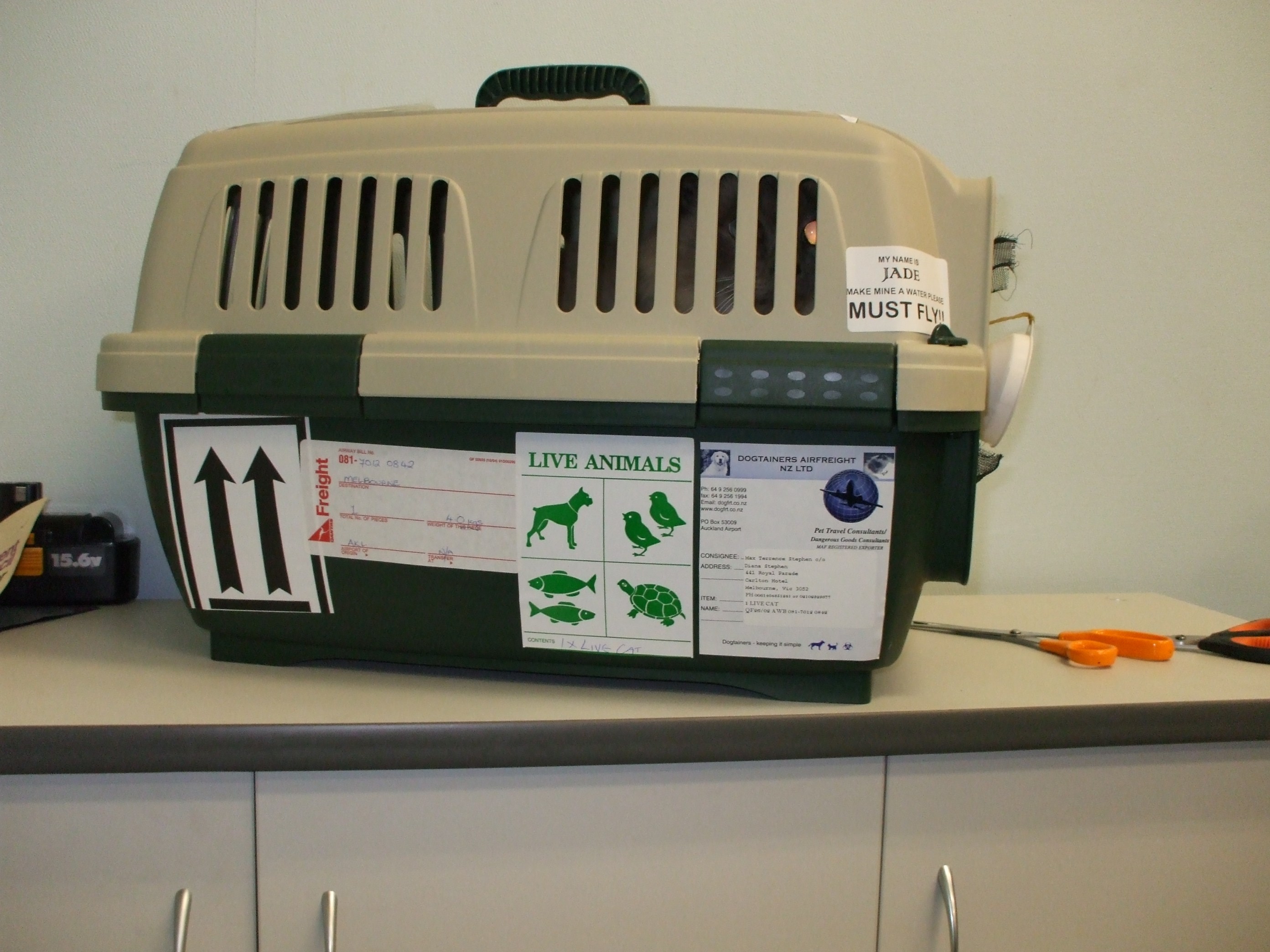
No matter which airline you choose, or where you’re going, finding a carrying case should be your very first priority. Make sure you have a suitable kennel for your pet to travel in. It must be comfortable enough for your pet to stay in for extended periods of time.
Some airlines will not allow you to fly your cat as cargo due to weather or space constraints but insist that your pet is in the cabin with you. This is a preferable option, as the cargo hold can be cold and cramped, and is usually reserved for larger pets like big dogs.
After taking these things into consideration, you are ready to book your flight.
“Plane” Ahead
Before you book your flight or flights, consider your feline friend. What is their general disposition? Are they young or old, quiet or active?
An energetic or noisy cat might be better flying as cargo but an older, calmer cat can stay with you in the cabin.
Can your cat stay in one spot for a long period of time, perhaps with only a small toy, water, and the occasional snack?
Virtually all airlines allow pets but not without restrictions. It’s generally easier to get a cat on a plane than a dog, as they are smaller and have fewer cultural stigmas.
Contrary to popular belief, airlines almost unanimously request that you not sedate your pet. Sometimes a calming medication can have the opposite effect if the animal is panicked or in an unfamiliar place.
Sedate your pet only if your veterinarian recommends that you do so. Many airports have pet-friendly areas that you and your pet can use to rest between flights. Some charter or “no frills” airlines still do not allow pets at all because of space and baggage issues.
The major carriers usually have all choices available. Your cat can travel in the cabin with you, in the luggage compartment if you go on the same on the same flight, or departing as cargo on another flight.
Certain carrying equipment and accessories will be mandatory in transit. You will be required to purchase them on the road if you don’t have them, which will be more expensive and cause delays.
Visit the Vet
Getting your cat’s health checked by a vet and officially certified are two of the biggest steps you and your cat have to take.
Aside from the documents for customs, the airline will require their own documentation that describes the cat’s vital statistics (weight, age, size, color) and confirms that it has a clean bill of health. Find these vital statistics by using the equipment at the veterinarian’s office instead of your scale at home. Measure the length from the tip of the tail to the tip of the nose, and the height from the floor to the top of the shoulder, and obtain written confirmation regarding your pet’s measurements from your vet.
Ask your vet about motion sickness medication for your pet even if they are a seasoned traveler. Try to choose something that won’t sedate them. Get as much documentation as possible regarding vaccinations, chronic conditions or surgeries.
Up-to-date rabies shots are required for any cross-border travel and may also be required by a motel or other kinds of transportation.
Most airlines will only require certification of a recent vet examination and confirmation of rabies shots as a health certification. This will most likely need to be accompanied by a similar certification from a government agency, such as the FDA (Food and Drug Administration) or the CFIA (Canadian Food Inspection Agency).
Island nations such as Japan, England and Australia are notoriously strict and will require at least a few weeks of quarantine regardless of your preparations.
Countries like South Korea, Canada and Mexico have minimal requirements of rabies shot and a clean bill of health. The US is also very accessible with the exception of Hawaii. Check with the embassy of the country that you wish to visit for the exact forms and regulations.
Follow these steps to the letter. Failing to do so might result in you and your pet being turned away, or even worse, your cat could be euthanized. Avoid this nightmare and be prepared!
Purry Landing
Make sure that you have the proper paperwork on hand if you are crossing an international border. You should have at least two copies of each.
Bring a supply of any medications or special food your pet needs. These might be difficult to find depending on where you’re going.
Rent a car with a pet-friendly company to avoid dealing with trains or public transit, which usually do not allow pets unless they are working animals. Uber or other rideshare programs also have these options.
Consider your arrival arrangements carefully. Determine if you will need a hotel and for how long. Budget carefully, as motels often require pet deposits, and pet-friendly rooms can be more expensive.
You will be required by the motel to provide a contact number to confirm your reservations (this will also be required by the airline, if applicable) and details regarding your furry friend, including its measurements and weight.
There are many reasons to take your cat with you when you travel.
Perhaps you are taking an extended vacation and your affectionate, sensitive feline companion can’t bear to be left alone. Maybe you’re taking an employment contract overseas that might last months or even years and you can’t bear to give your best friend away.
Fear not, as your feline friend is now welcome in airports, planes, and hotels as long as you stay informed and plan ahead.



References:
Pet Airline Information | Airline Travel Tips | PetTravel.com. (n.d.). Retrieved from http://www.pettravel.com/passports_airlinetrtips.cfm
Pet Travel Tips. (n.d.). Retrieved from http://petswelcome.com/articles/travel-tips
Pets (Dogs, cats and ferrets) – Animal Health Certificates – Canadian Food Inspection Agency. (2018, March 5). Retrieved from http://www.inspection.gc.ca/animals/terrestrial-animals/exports/live-animals/health-certificates/pets/eng/1321265624789/1321281361100
Travel Training for You and Your Pets. (2017, October 19). Retrieved from https://www.fda.gov/AnimalVeterinary/ResourcesforYou/AnimalHealthLiteracy/ucm352635.htm
The featured image was taken by a neighbor of mine when Chamsae and I lived on Nelson Street in Vancouver.



 Cristina in Oaxaca