The Pantheon was quiet this time of year. The sun stayed high in the sky, the moon hung low in the east, and the wind brought rain down from the mountains. The harvest times and cold weather brought feast days and funerals, which meant more offerings and gifts for her and her undead patrons.
Named for the darkest time of night, Madrugada was vampire who fancied herself an entrepreneuse. In a frenzy of creative energy, driven by the lights and flowers of autumn, she had converted this crypt into a quaint watering hole for other residents of the graveyard and called it False Light.
This is how vampires, zombies, ghouls, and other undead refer to any type of illumination that isn’t sunlight. The northern lights in the sky are a type of false light.
Madrugada knew a place where it was always night. Or so she told her patrons, who often asked, and then didn’t believe what she told them. She had lived there for centuries, which was only a fraction of her existence.
Safe as candles, Madrugada always said. Wouldn’t even hurt a bat.
The crypt became known as an undead refuge as much as a successful business, and compelled her to stay on the mountainside. As the air cooled and the darkness rose, she sat up in her coffin and peeked carefully out of the western window.
There was still an orange light touching parts the mountainside. She guessed the sun was still hovering like a dark orange circle over the ocean but sinking fast.
Madrugada leaned back into her coffin and bided her time by examining the most recent version of the drink menu. She was proud of her latest revisions. The total was now a perfect nine, and read as follows;
Holy Water. It burns, but in that good way and not like the real stuff. A bit of ground habanero, a shot of human vitals, and sharp apple soda.
Hot Vampire. Not usually thought of as the warmest of bodies, the Host maintains they are the most appealing of the undead races. She is willing to die again on that hill with this drink, which combines a shot of Birmingham whiskey with whole Pequín peppers, lemonade, and jellied tonsils.
Tiramigiu. Why pick them up when you really want to lay them down? Coffee, brain pudding, fresh cartilage, and the blood type of your choice.
The Bloody Nun. Based on a true story. Clamato juice, beer, a shot of type A, and a stick of red licorice.
The Torchbearer. Cream, maple syrup, type O negative, and tequila, layered and lit on fire. Mind your nose, if you still have one.
Winter Harvest. In memory of our fallen hero Grendel. A shot of Akvavit with sheep or goat’s blood, garnished with human bone marrow, drained and freshly smashed every day.
Queen’s Poison. In honor of one of our most famous visitors. Sparkling water, lime, absinthe, plasma, and of course a blood-curdling scream. Not likely to turn you into an old hag, unfortunately.
Screaming Eyes. How can the eyes scream? Every vampire who likes the eyes knows the answer to this riddle. Mull it over with tomato juice, a splash of lemon, vodka, a pinch of salt, oversized tapioca pearls, hemoglobin, and a generous garnish of pickled eyeballs.
The Unconsecrated. A drink from the Host’s own ancient homeland, inspired by the Vrykolakas of Greek folklore. Honey syrup, lemonade, ouzo, and fresh cerebrospinal fluid.
The pub food usually consisted of the usual fare anyone would expect in a haven intended for the undead. Roasted beetles, crunchy dried ears, fried fiddleheads. Tonight, however, was special, so she was serving illuminated cakes using the same ancient recipe her mother had taught her.
The lamps were lit, the glasses were gleaming, and the sun fell into the ocean. It opened a dark red path from the horizon into the shadowy hills that sheltered the Pantheon. Her first customers would be here soon, fat and happy after eating some drunk tourists caught in an errant wave.
Mexico has a number of famous tourist destinations, but there are still many mysterious places off the beaten path that are waiting to be discovered. Zipolite, also nicknamed “the Beach of the Dead” is one of those special places. Get there before the modern world gentrifies it into one of these charming and fashionable “magical towns.”
Zipolite
Playa De Amor and Roca Blanca
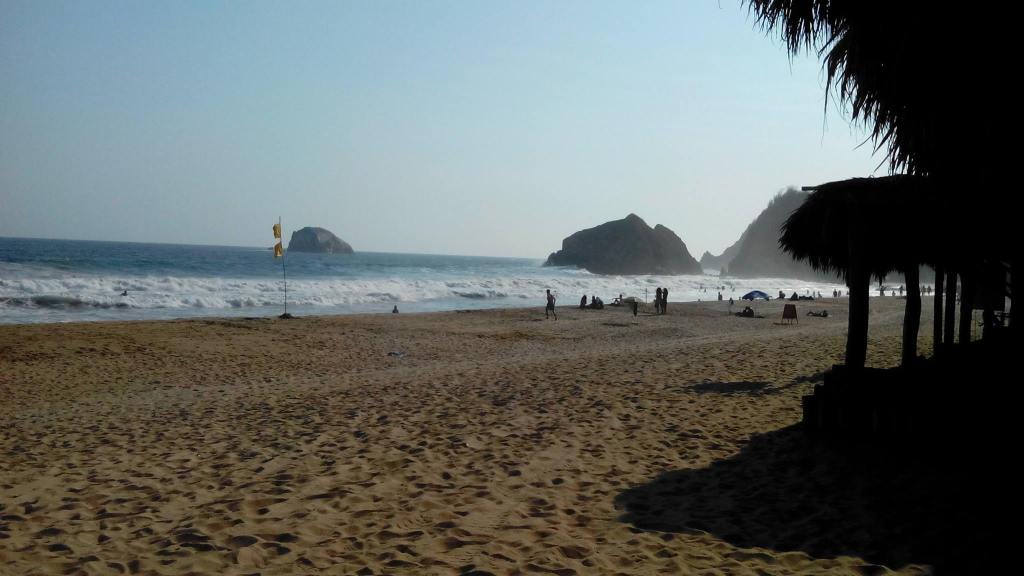
Playa ZipoliteRoca Blanca and Palapas, Playa Zipolite
There are probably thousands of beaches in Mexico, but this is the only one in the entire country where nudity is permitted and cannabis is openly smoked by both locals and tourists. Local vendors sell a wide variety of curiosities and handmade treasures. Buy crystals and glass pipes, get a henna tattoo, or indulge in a massage with scented oils. The nightlife is more than decent considering the size of Zipolite, and clubs and bars have names like “El Hongo” (the mushroom). The legacy of the first hippy tourists is alive and well between Playa de Amor and Roca Blanca.
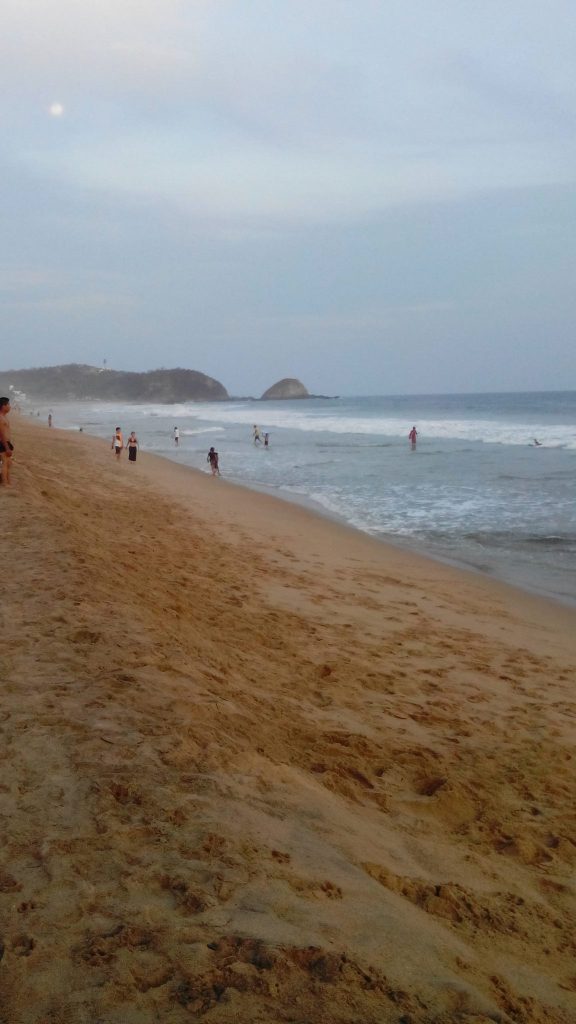
Zipolite is not a big place, but the beach itself is vast and open, clearly marked by Roca Blanca in the west and Playa de Amor in the east. Roca Blanca simply means “white rock” and that’s exactly what you will see on the north end of the beach. This is a haven for seabirds and they’ve branded their personal space in their own distinctive way. Most of the shops, stores, tour guides, bike rentals, transportation, paved roads and other amenities are on the Roca Blanca side of Zipolite. Closer to Playa Amor you’ll find a quieter neighborhood with a soccer field, a quaint seaside church, and a children’s playground along with a few small shops and a relatively peaceful residential neighborhood.
Playa de Amor is the small, sheltered alcove at the very end of the beach on the eastern side. You have to climb a steep stairway to get there but it’s not a long one. In the high season, there’s a small restaurant perched on the top of this rocky outcropping where the stairway dips back down towards the ocean. This tiny beach is hidden in a little cove between two steep hills. There are actually two or three secret little beaches near this spot, and rip tides here are virtually non-existent, so it’s a nice place to safely swim. The rest of the beach is marked with yellow or red flags to denote safe swimming spots. The undertow is no joke and will often shift with the tides, winds, or time of day. Enjoy the ocean but be confident in your swimming skills, listen to the lifeguards, and bring a friend.
The End of the World
The southern coast of Oaxaca was virtually untouched by tourism as late as the 1960s, when the first hippies headed south looking for a counterculture haven. They found it here, on a pristine beach that had neither bank, cop shop nor boat launch.
The name, Zipolite comes from the local indigenous Mixtec language and has two possible meanings. The first, which has become a part of the local urban legend and the area’s nickname, is “the Beach of the Dead.” The beach is uncrowded and virtually free of boats because of the dangerous and unpredictable rip tides that make navigation difficult and swimming dangerous. The second meaning, considerably less romantic and therefore likely more accurate, is simply “the place of many hills.” The latter is also accurate and makes for some inexpensive lodgings that still have a first-class view.
The geography of the area, including the ocean itself, also contributes to the ethereal feel Zipolite seems to have. Unlike the beaches to the north, which face west across the Pacific Ocean, Zipolite faces south. To head straight out from Zipolite would take you not to Hawaii, Asia or New Zealand, but to a vast expanse of virtually nothing, at least until the wastes of Antarctica.
The locals share all kinds of stories about the ancient history of the beach and those that were fortunate enough to find it before the days of highways and airplanes. One tall tale is about the ancient Nahuatl people. They were aware of this isolation on some level and would come here to offer sacrifices to the gods of the dead that lived past the end of the world. How true that may be has been long lost in the riptides of time.
I tell the friendly camionetta[1] driver that I don’t need directions, and he’s surprised at first.
I smile and mime smoking a joint. Now he understands, and gives a hearty wave to incoming traffic as we pull back onto the highway.
The folks who know Zipolite know it well.
No rush on this journey. I’m high already. The few hits I took of that nice fat roll before I left Puerto Escondido an hour ago are just starting to wear off. I’m looking forward to a pleasant come-down on the next leg of the ride, which consists of an old truck careening through the jungle. It’s scenic, breezy, and social. The perfect metaphor for life on the Oaxacan coast.
This region of Mexico has yet to see development on the scale of other notorious cities. You’ll still hear sad stories about how Tulum went from fairly rugged and peaceful to a gaudy tourist trap in less than a decade. People curl their lips a bit when they mention Acapulco, about 8 hours up the coast in the neighboring state of Guerrero, but it doesn’t have the history to be any real competition.
Tourists come to Oaxaca on local terms, with means no fear of shameless authenticity and a quiet, steadfast mindset that rejects gentrification. There is little grace for the white man here.
Don’t like the rough roads, menus in Spanish only, or showers with no hot water? Here’s a bus ticket to the Yucatan Peninsula, snowflake. And don’t let the door hit your pasty ass on the way out.
The transportation I regularly take from Puerto Escondido is what folks back home might refer to as “a chicken bus.” And yes, I have seen chickens on it, along with dogs, cats, and sometimes huge bushels of fresh produce.
I have yet to see a bale of fresh weed, but hope springs eternal.
The junction of San Antonio is the first place I change buses. It’s about an hour and 15 minutes east of Puerto Escondido. For those coming from Huatulco, it’s about the same distance, but you’d get off at the crucecita[2]of Pochutla instead. Take another camionetta through the seaside town of Puerto Angel to reach Zipolite.
Private taxis are also available but coast a lot more. It’s easy to get used to the more economical public transit system if you spend a lot of time here, and I do, so the whole trip from Puerto Escondido to Zipolite takes less than two hours and costs a total of seventy pesos. That’s less than five US dollars.
Excellent. More money for the deadly triumvirate of seafood, cerveza, and cannabis.
The Road to Zipolite
The ride from Puerto was fairly comfortable. I shared a seat with a commuter from Pochutla. It’s common to chat with total strangers on buses here and it took some time for introverted me to get used to it. My travel buddy heading back to his family home after doing some work in Puerto, and jokes that he wasn’t sure if he should talk to me at first, since guerros don’t like to talk to strangers. But the time passes more quickly, don’t you think?
When he finds out where I’m going, everything makes more sense. Only long-term residents and serious tourists can find Zipolite.
I walk just a few meters past the junction to find some shade while I wait for the next ride. I’m not alone for long. An older lady with a plastic tub and a cooler filled with snacks, drinks, and other edible goodies is waiting as well. She’s heading to the beach to sell her wares to stoned and thirsty tourists, and I’m pleased to give her a head start. I happily purchase a bag of roasted peanuts. They mix them with a combination of dried garlic, peppers, and salt. Rich, oily, and crazy delicious.
I caught a buddy of mine throwing out the dried garlic cloves once. Good thing he brought me some amazing hash because I just about killed him.
We’re soon joined by a few other tourists as other buses and taxis drop folks off at the nearby junction. The little camionetta is already full when it comes by, but this is Mexico, where there’s always room for one more. After a moment of everyone working together to rearrange the bags and make a little space for me and the Peanut Lady, we’re off.
It’s standing room only, which is fine, as I’m near the front of the truck and have a clear view of the road ahead. The first leg of the journey takes us past a few lush fields and open ranches, then we make a few sharp turns and the jungle closes in around us. We’ve recently had some heavy rain, so the trees are thick with leaves and the air smells like wet earth and fresh flowers. My sense of smell is heightened while I’m stoned, which can be good or bad. Right now, it’s glorious.
There are several stops along the way, but the first real city we reach is magical Mazunte. Seriously, this is one of Mexico’s “Magical Towns” and it’s the closest thing to a tourist trap in the region. I think of it as gringo flypaper. Most folks who don’t know any better stop here and never go any further west, and that’s what I’m thinking as I watch virtually the whole camionetta disembark.
Good, I think. Fewer people to mess up Zipolite.
Mazunte is nice, but that’s the problem. It’s a haven for hipsters, cruise ship passengers from Huatulco, and rich folks looking for yoga retreats and vegan restaurants. There’s some great shopping here, I have to admit, and when I have some extra cash I indulge in the upscale clothing, cosmetics and sometimes a new pipe.
Today, however, I’m happy to let others enjoy Mazunte while I move on. The last stop in town is by the Turtle Museum, where one person embarks to keep me company on the road to Zipolite.
Like me, this scruffy gentleman has lived in Mexico for a while. He looks like he’s been here since the 1960s and from the odor it’s possible that he hasn’t bathed since then, either. Now that sense of smell isn’t so fun.
He’s holding a fat, oily roach in his hand, which he smokes as he stands on the edge of the bumper, and the heavy purple cloud helps masks the perfume of an old school naturalist. I nod and smile, too overwhelmed with respect to let the smell bother me. It’s because of people like him that Zipolite is what it is.
The Beach of the Living
He offers me a haul, but I can smell the tobacco mix and politely decline, explaining in English, “That’s not how we roll them in Vancouver.” He smiles and laughs, a slight British accent showing through his reply, “Oh, the organic! Good show!”
In the hippy heyday several decades ago, there was virtually nothing connecting the Playa Chica to the outside world. There are legends told about the single dirt road that led to Oaxaca or the occasional boat that would leave from Puerto Angel or Huatulco, but that was all. The neighborhood of Zipolite stayed isolated longer than others. The dangerous currents that surround the beach make it too awkward to land a boat, so any water transportation was also extremely limited.
Despite that, a few intrepid foreigners who loved the alternative lifestyle managed to find it in the late 1960s. They brought with them cannabis, nudity, tolerance in general and an appreciation for a simpler way of living. The legacy endures for others that would follow.
The camionetta turns down a gentle curve, and here we are just outside of Zipolite. I used to get off at the crucecita bit further down, but then discovered a back lane that takes me to the main street a lot faster.
Old Hippie waves as I hop down. He lives nearby, but today he’s heading to Pochutla to find a bank machine.
I call it the back lane, but I have no idea if it has a real name or not, or even if it is a lane. It’s used as a road in the dry season, but it spring turns into a muddy river bed. It used to fork off to the right, but after a tree fell across it during a spring storm a few years back the locals are used it as a foot or bike path. It explodes into a nest of rich yellow flowers every few weeks, which also might be why the locals haven’t moved it.
Bike tracks and footprints line the narrow path that leads behind it. Sooner or later, some motivated local with come down here with a chainsaw and collect some firewood.
I pass a few hostels, houses and shops that start to peek out of the jungle. Most people recognize me from previous visits and wave from their front windows. It’s early summer and the tourists that saturated the place a few weeks ago have gone home.
The paved road opens up to the street known as Adoquin, and up until three years ago it was the only paved road in town. There’s no shortage of upscale hotels here but only if you know where to look. The nudist and naturalist community love Zipolite, and there are more than a few places that welcome the lifestyle.
If you’ve seen the film, “Y Tu Mama Tambien” then you’ve seen the expansive Playa Zipolite. Great for selfies but not so much for swimming. The deadly currents that prevent the construction of a boat launch make for ideal afternoon surfing but are deadly for swimmers. It’s theorized that the people who lived here in ancient times actually used the strong undercurrent to dispose of their dead or offer them to the gods, leading to the theory that zipolite is an ancient indigenous word that means “The Beach of the Dead.”
That also might be why hardly anyone wanted to live here.
To combat this problem, a group of volunteer lifeguards was formed in 1995, cutting the mortality rate in half. These guys are still here and they’re the backbone of this beach. I’ll be visiting them soon. They’ll save your life in more ways than one.
I’m not staying the night this time around, but I’ll stop by my favorite posada[3] and greet the owner.
Lifesavers
I turn right at the sign with the whale, and I’m on the beach. The little hotel forms a square archway. I walk through it and find my friend lounging in one of the many hammocks. As usual, he’s accompanied by a thick bit of pulp fiction and a thermos of iced tea.
“D!” I extend my hand as I greet him. “Long time, no see!”
This is a joke. I was here about ten days ago.
We take a few minutes to get caught up. He’s planning on heading north again soon. D. is originally from California, and he loves cannabis just as much as I do. He’s been here since the 1990s, when the place was still mostly virgin forest, and he was the first person I met in Zipolite.
The concierge always has a nice fat joint waiting for me when I arrive if I’m staying the night. This time, it’s just a day trip for lunch and a bag of green goodness. D. has a special treat today anyway. He digs into the fridge and brings out a plate filled with brownies.
“I know you’re more of a smoker,” he grins with mischief, “but a friend of mine made these, and they’re exceptional.” He wraps two into a paper towel. “Take them with you. Nice for the bus ride!”
I thank him profusely as we walk back to the hammocks. Now it’s time for me to head next door and get down to business.
I’ll call him Jesus, as I consider him to be my personal savior. I’m sure there are others that think of him that way in a literal sense. If Jesus had a peso for every distressed swimmer that he’s pulled out of the deadly riptide during his career as a Salvavida[4], he could pay for Trump’s border wall all by himself.
When he’s not cheating Death, he’s selling weed. I stand by my belief in his divinity.
Of course, Jesus has his chosen Disciples. The dangerous nature of the ocean means there’s a whole team of Salvavidas and if he’s not here there’s always a kind friend to help you out. Today it’s fairly quiet and Jesus is here with the apostles Matteo and Juan. Matteo has a frisbee on his lap and is rolling a joint, because that’s how you roll a joint on a breezy shoreline.
Juan and Jesus are discussing some surfing later and Juan is motioning towards the Roca Blanca side of the beach, so he doesn’t notice me right away. Matteo sees me first and greets me before handing me the frisbee and offering me his seat. It always gives me a secret joy to see these rough surfers in their board shorts and tattoos being such perfect gentlemen.
He knows what I need, and since it’s not a busy day on the beach he can grab it for me while Jesus and Juan keep an eye on the swimmers. I’ll finish the joint while I wait! Gracias amigo!
By now, of course, Jesus and Juan turn and say hello. They call me Maestra, I reference to my career as an English teacher. It’s what originally brought me to Mexico. When I first started coming to Zipolite I worked at an Oaxacan university about four hours down the road. Juan has pretty decent English and he likes to practice every chance he gets. And there are many chances, since the whole world comes to this beach. Jesus speaks some English and French, but he and I usually speak in Spanish.
Life is basically good, but they have concerns. The mafia comes sniffing around once in a while and limits their ability to sell. Jesus has a good relationship with the local cops, who look the other way for the most part, but there’s always the federal guys and of course, someone is always on the take. Sometimes they sell openly while other times things have to stay quiet. At the moment, it’s a bit of both.
The drug trade is big money here, especially in the high season, and the local organized crime is always trying to get a piece. The Salvavidas know I come here so I can buy weed outside of the crime element. Luckily, Zipolite is well protected by a small, close community that’s more like an extended family. They were here before the mafia, the police, or even the road, and the organized crime thugs at least have some respect for that. There are warnings, sometimes some harassment, but no deaths or beatings. Independent dealers in bigger cities are not so lucky. That’s another story.
I finish rolling. The joint is impossibly fat because I had to bust up the greasy buds with my fingers. Jesus proudly proclaims that he grew this himself on his patio. Totally organic and perfectly flushed, this is his own secret stash.
The thick blue smoke rises from our circle of plastic chairs. It sure beats the hell out of that skanky overpriced “Oaxaqueña” that I find in Puerto. On the other hand, the low-quality of the city weed has been a strong motivation to get the cannabudder recipe right.
Matteo returns with a small bag filled with delicious weedy goodness. I roll another joint from the weed from the bag. It’s the same stuff as the frisbee joint, which doesn’t happen often. It’s low season, Jesus explains, so he can break out the good stuff for the regulars.
As if listening to a sound that only he can hear, he stops speaking and turns quickly back towards the shoreline. Someone is in trouble, might be a surfer or a swimmer.
Juan is already grabbing a flotation device, and his whistle is clenched between his teeth. All three bolt out from under the palapa[5] without another word.
I don’t take it personally. I hear the lifeguard whistle sound as I find a place on the beach to stretch out and get some color, free of a pesky tan line. Matteo won’t mind if I keep the frisbee for the time being. I’ll get another joint ready for their return, and my mind turns to thoughts of shrimp cocktails and beer.
This is Zipolite, the Beach of the Dead. Bring your gay partner, a bag of weed, the dog, and your bare ass. All are welcome. A true paradise on Earth.
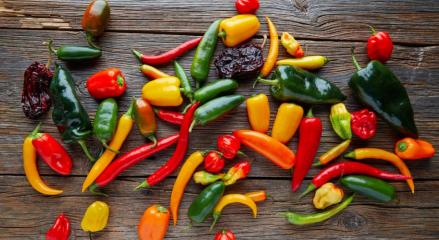
Enjoying Mexican food means eating and cooking with peppers.
It’s common to see the chipotle and jalapeno varieties these days in some Canadian cities. I wouldn’t be surprised to see one in a specialty store in Vancouver. Even the bigger chains like Safeway would have the trendy chipotle version.
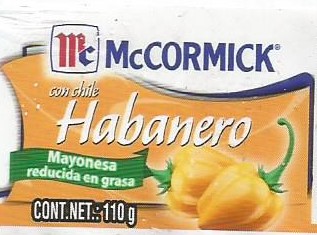
The habanero-mayo is one I’ve only seen once anywhere in Mexico. This was the only size I saw them in, and that’s all you need.
First, I like these jars. They make excellent shot glasses and are great for storing smaller things like tacks, paper clips, and loose beads.
If you find this and want to add some spice to your egg salad or chicken sandwich, be careful. I tasted a bit just as a test and the level of picante made my tongue painfully numb for several minutes. In case you didn’t already know, this happy looking pepper is notoriously hot. The cheerful red, orange, yellow, or even pink habanero pepper hides a brutally high measurement on the Scoville index. This volcanic, molten magma lump of spiciness pretending to be a pepper makes the humble jalapeno cry in shame.
Capsaicin, the chemical that makes peppers hot, has some interesting medicinal and recreational uses. The endorphin rush that goes along with the painful spicy flavor is used for pain relief for some and just for crazy fun by others.
This chemical is so badass that it attacks cancer cells and clears the phlegm from your sinuses. Your metabolism will speed up just to get away from it.
Use the same precautions with habanero mayo as you would with the actual pepper in its raw form. Anyone who has suffered the pain of “jalapeno hands” will tell you that those rubber gloves are worth it no matter how stupid you feel at the time.
Just for the record, I tried all of those home remedies at that link during our Christmas Chili Cook-off. None of them worked. That was just serrano and jalapeno peppers, so imagine how painful habaneros would have been. I wasted a lot of decent rum and yogurt, too.
If you happen to be in Puerto, check out the 6-17 Minisuper next to the gym. his little bodega has been here for years and has all kinds of crazy crap.
This store looks the same as other neighborhood bodegas, but it seems to carry a wider variety of condiments and preserved food in jars and tins. A worthy place to visit in case you’re looking for capers, pickles, olives or other such goodies in Puerto Escondido.
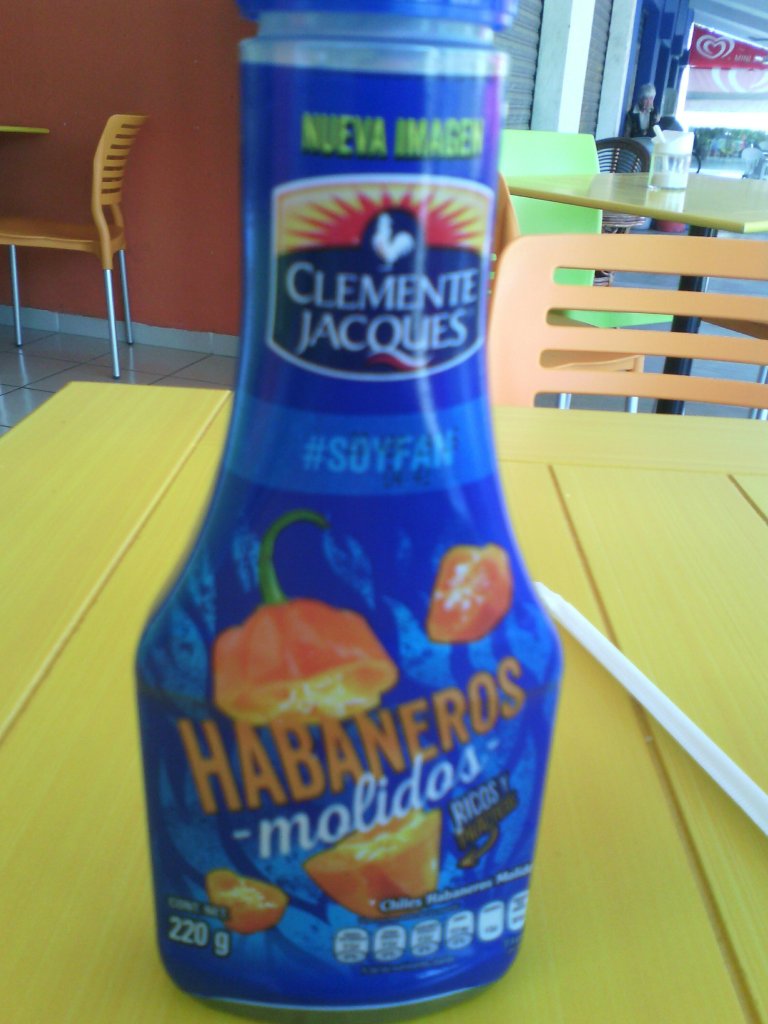
Updating this post to include another discovery, habenero salad dressing. I saw this at a quaint cafe on Rinconada today called Latte Chocolate. Awesome sammies and amazing loose-leaf tea, by the way.
I said I hardly ever saw this. Now, it’s haunting me.
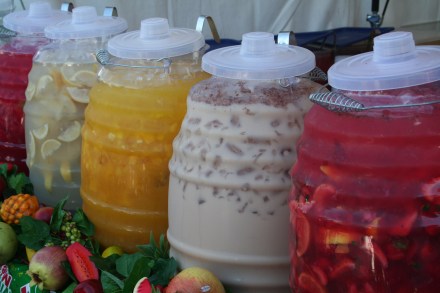
My Easter Season started a few weeks ago. On March 9th, I came to school for class and was pleasantly surprised to find that the regular schedule was suspended to celebrate the Festival of Saint Photina. The students had mixed a few big batches of “flavoured water” (also called “aguas frescas” in other parts of Mexico) which they were serving to the teachers and younger students from the Primary and Kindergarten side.
There were some really nice varieties, including classic favorites like pepino-limon and jamaica along with several creative horchatas. I think it was still the usual rice base but it included papaya and walnut, too. After the teachers and younger students had been served, the students moved the large tubs to the entrance of the school and served free refreshments to passers-by.
Eventually I asked another teacher if there was any deeper meaning behind all this sitting in the shade and enjoying cool drinks when we should be working. It turns out there is.
The original aqua fresca.
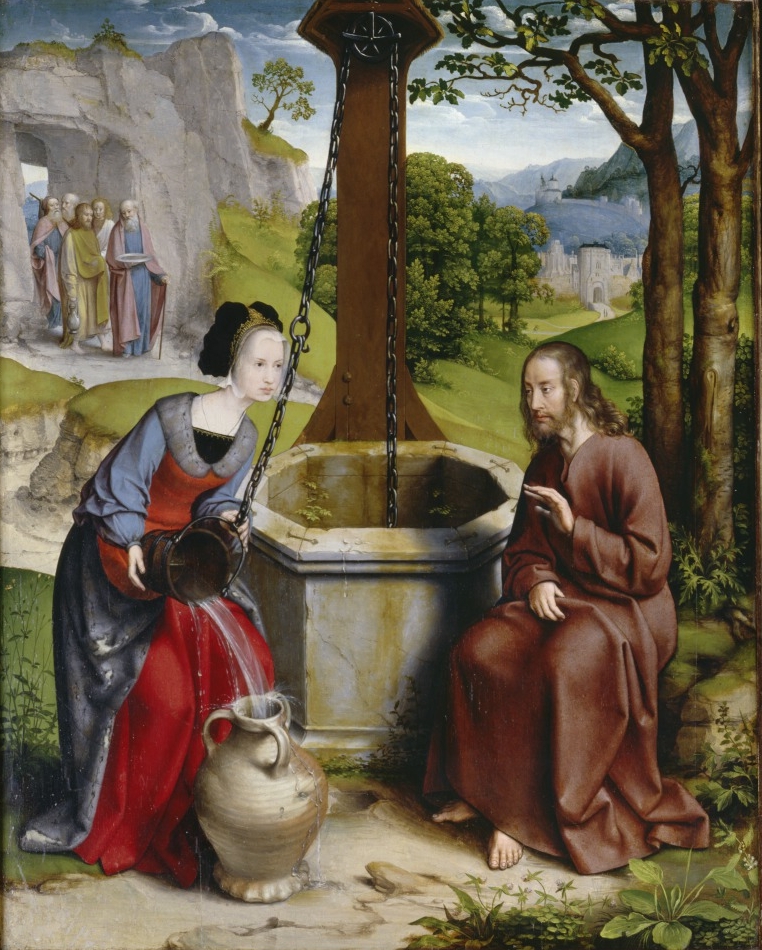
Every Friday that is part of Lent has a special meaning, especially in Oaxaca. This Friday March 9th we were celebrating Saint Photina. This festival is unique to the state and not commonly observed in other parts of Mexico. She met Jesus at a well during his journey to Jerusalem, and according to the Gospel of John, the two had an honest and intellectual discussion about spirituality and thirst after she helped him draw some cool drinking water from the dangerously deep well.
Then she converted to Christianity. Not only that, she converted her sons and the whole family went on to travel the world as evangelists before being martyred in Carthage. Legend has it they threw her into a well, a great example of an ending that would never work if you tried to include it in a fictional story, which leads me to believe it might have actually happened. And Christianity is all about how many people you convert and how painfully you die, so she’s pretty important.
Aside from being the inspiration for our school party, Photina is an important figure in Eastern Orthodox Christianity and Asian feminist theology. If you’ve ever met a “Svetlana” you’ve met someone who was named for this saint.
Our students were essentially recreating the meeting of Jesus and Photina. Some of the lessons learned during these non-class hours include welcoming strangers, sharing what you have, and being hospitable and friendly in general.



 Cristina in Oaxaca