It’s that time of year again. The frost is on the ground, the Thanksgiving turkey is picked clean, and the winter holidays are approaching. If you’re heading to Mexico for some hot steamy fun, cool off with one of the many beer cocktails that are making waves south of the border. Bring a few recipes home and use them with your favorite local craft beer to remember your sunny vacation.
Before we swim over to the poolside bar, it helps to know a few things about Mexican mixed drinks, especially ones that include “chela”, a nickname that Mexicans have given to everyone’s favorite frosty beverage.
If you’re heading to Mexico for some hot steamy fun in the sun, make sure to try one of the many beer cocktails that are making waves south of the border. Bring a few recipes home and use your favorite local craft beer to remember your vacation.
Before we head to the bar, it helps to know a few things about Mexican mixed drinks, in particular ones that include beer.
Let’s start with some of the more surprising and exotic ingredients with this handy glossary.
Salsa. This is not the chunky variety that you use as a dip back home. In Mexico, salsa just means “sauce” and it can be any number of dips or toppings. Ketchup, Worchester sauce, salsa maggy, and Valentina are all examples of “salsa.”
La Ramona
A distinctive drink that’s often served in a large, bowl-like glass with the open beer bottle used as a garnish. Tequila, beer, clamato, salsa inglesa, salsa maggy, (petroleo) limone, tahini, orange juice.
La Ramona is a distinctive drink that’s often served in a large, bowl-like glass with an open beer bottle used as a garnish. It includes tequila and beer, Clamato juice, Worcestershire sauce, lime, and tahini.
Gummi Chela
Candy is dandy, liquor is quicker, and together they’re better. Limone, clamato, sal, mango gummies with red sauce, preferably dark beer. If you’re in the mood for something sweeter, try a Gummi Chela.
We’re not sure who had to the idea to combine dark beer, Clamato juice, and gummy bears with spicy red sauce and a rim of tangy salt, but kudos to that creative mind.
West Coast Michaleda
This one is more popular on the Pacific Coast of Mexico, where tourists from the northwestern US and Canada’s Lower Mainland tend to congregate. Coasties from the north like their seafood and beer, so why not combine them into one big happy glass? This drink that eats like a meal includes fried or peeled shrimp, pan drippings, other “chela” fixens. Dark beer is recommended but it’s not a requirement.
The West Coast Michelada was invented on the Pacific Coast of Mexico, where tourists from the northwestern US and Canada’s Lower Mainland tend to congregate. Visitors from the north like their seafood and beer, so why not combine them into one big happy glass? This drink that eats like a meal starts with a dark beer and includes fried or peeled shrimp, pan drippings, and other typical “chela” garnishes like lime, spicy red sauce, and salt.
Michelada de Sabores
Boilermakers. That means you get a shot glass either on the side of actually dropped into an oversized mug of beer. A frosty beverage with lemon, salt, and almost any flavor of alcohol but in particular tequila or mescal.
Pina Colada Chelada
Take away the sweet coconut milk and rum and replace it with beer, and you have this creative take on an old favorite. It might need a different name at that point, but there has yet to be a Beer Cocktail Committee ruling on what exactly this dink might be.
The Illiad told the story of Troy’s destruction. The Odyssey brought the Greeks home. The Aenid followed the Trojan survivors west.
But what happened then?
A Two Scene Play
About 1000 BC, in what is now central Italy, formerly the Etruscan Federation. Every year, the leaders of the 12 biggest and most prominent cities meet to discuss reginal issues. Most of the time these meetings are discreet, civilized, and orderly. Today, however, the council is facing a crisis that will shake the foundations of their comfortable little empire.
Cast of characters;
The cities of the Federation: Arezzo, Kisra, Clevsi, Orvieto, Perugia, Cortona, Populonia, Vieo, Tarquinia, Vatalu, Volterra, and Volci
Aeneus, The Last Prince of Troy
Setting: The interior of a lavish but practical council room, featuring a long table with 12 chairs. One of the chairs is empty. The other eleven council members are talking about the latest news and wondering where the missing member – Vieo – could be. There’s a general murmur of chatter in the room as the scene begins.
Scene 1
ORVIETO: So, where is he? The sooner we get started the sooner we can leave. I have grapes that need pressing.
PERUGIA: You can fuss over your grapes later. Vieo is the closest to the coast, and he sent a messenger about the boats coming into sight. I sent a note back that he was to get a reasonable estimate of how many there are.
VOLTERRA: We could almost see them from the mountaintop. Word from the north says 30 boats, but…
The council door swings open, and Vieo stumbles in, obviously agitated and rushed.
CORTONA: Ho, our coastal friend arrives! What news from….
VIEO: (interrupts, obviously upset) They lied to us! I knew it, those bloody Carthaginians! They said what, 20 boats, maybe? There are more than 60 boats parked next to the swamp below my city!
The other cities make frightened or angry gestures while the chatter in the room intensifies. Only the two central figures, Perugia and Tarquina, remain calm, speaking quietly together. The chatter goes on while Vieo takes his seat. The other figures next to him at the table offer him comfort and a cup of wine.
ORVIETO: Drink up friend, it’s my latest vintage. Calm yourself, poor fellow!
VIEO: (hand trembling, puts the cup on the table) There were some big ships, enough for an army…and they say the prince himself is with them!
VOLTERRA: Dear gods, no wonder Dido sent them off! If Carthage can’t handle them…
AREZZO: The Trojan army, at our doorstep!
KISRA: We’ll be crushed!
PERUGIA and TARQUINIA have been sitting quietly, observing the scene. When panic sets in, TARQUINIA calmly rises. Her voice echoes throughout the council chamber.
TARQUINIA: That’s enough! Vieo, sip your wine, and you two (nods at his seatmates), pipe down! As if we don’t have our own fearsome army? Future generations can rave about checkerboard patterns and sweet white wine, but is that’s what built the Federation?
KISRA: But…the Trojans….
PERUGIA: (interrupts her) …have been crushed by the Greeks. You mean those Trojans? Whatever they have in our harbor is no more than a ragtag group of pathetic survivors.
TARQUINIA: Those that fled, and have been running west, wide eyed and scared, like a lost herd of deer ever since.
VOLTERRA: The prince, though! What if he sends a delegation? An official letter or…
PERUGIA: (produces a rolled parchment) Like this?[1]
The scroll has a red ribbon and a golden seal that bears the crest of Troy. A collective gasp fills the room. The chatter dies down as TARQUINIA motions for silence. PERUGIA rises to her feet.
PERUGIA: The Prince has requested asylum for the survivors. Including a space to build permanent homes and settlements.
A murmur goes through the room. Voices are raised once again.
CLEVSI: It is as we feared!
VOLCI: A Prince of Troy, building a new city!
CORTONA: How long is it until they march north?
VALATU: Another empire, here on our shores!
VOLTERRA: May Tinia rain fire on their ships!
AREZZO: (yelling) My people will die before that eastern filth touches our streets!
KISRA: (cries loudly, clutches her beaded necklace) They’ll take our daughters, steal our children!
PERUGIA and TARQUINIA stay silent for a few moments and calmy let the anger in the room rise to a crescendo. When the murmur rises to a roar, they nod to each other, and TARQUINIA interrupts again.
TARQUINIA: Fellow cities, please, please!
PERUGIA: We understood you would have this response. We have already drafted a response we think everyone will accept.
A hush falls over the room as PERUGIA produces another parchment, obviously a rough copy, and reads it out loud.
PERUGIA: We are grateful and honored to have the Prince of Troy alight on our humble shores. We are happy to accommodate your request for succour in our friendly Federation. (an angry murmur ripples through the air, PERUGIA raises her voice to speak over it) All we ask in compensation for this accommodation is whatever is left from your family’s hoard, and you and your people may have the lowlands below the cliffs of Vieo (PERUGIA takes a moment to nod in the city’s direction) which marks the southern border of the Etruscan Federation. (a deadly hush suddenly falls over the table). May you prosper and live in peace in your new home.
There is now total silence in the chamber. Anyone standing slowly returns to their seat.
CORTONA: Sweet merciful olives. He’s giving them the swamp.
VIEO: By Una’s tits, (he’s staring at PERUGIA) you are a heartless bitch.
PERUGIA: Well, YOU were the one crying about all those boats. Now you get a nice view to watch their progress.
VIEO: Progress? Are you crazy? They’ll die down there. Fever, no fresh water, nothing but bracken…
AREZZO: Nothing grows in that swamp. Are they going to live on anchovies?
VIEO: That’s the point (speaking with a sudden, resigned calm, as he stares into the now empty wine glass).
TARQUINIA: Either they wither and stay weak and under our control, or they die. Either way, we’ll have the last of the Trojan riches, with no war or opposition.
TARQUINIA returns to her seat. PERUGIA remains standing.
PERUGIA: (waves the parchment in the air) Well, that’s our draft. What say you?
Every city raises a hand in agreement, except for VIEO, who puts the empty glass on the table and gives it a forlorn stare. PERUGIA smiles and slowly returns to her seat. The lights dim and the scene ends.
Scene 2
A year has passed, and the day of the annual meetings has arrived. PERUGIA and TARQUINIA are the only ones sitting in the chamber. They’re sitting in front of a large basket filled with gold coins and other spoils. Other members start to filter in, and cordial nods and greetings are exchanged as the council chamber fills up. Once again, however, VIEO is late, and his chair remains vacant).
CORTONA: (gestures towards the empty seat) The one person I wanted to see.
VOLTERRA: Right? What is it this time?
KISRA: Perhaps the drama in the swamp is keeping him busy.
A light wave of laughter ripples through the chamber. PERUGIA and TARQUINIA laugh a bit louder than the others. But then VIEO appears from stage left, wearing rich robes, some impressive jewellery, and carrying a fancy carafe. Everyone changes their tune to greet him.
PERUGIA: Oh, there he is! (smile fades and regards his clothes with a raised eyebrow). What news from the coast?
VIEO: (obviously in high spirits, ignores PERUGIA at first) Hello everyone! Well met, my friends, well met indeed. (walks over to Orvieto first) Orvieto, lover of wine and song, hand me your cup. This is the best vintage you’ll ever taste. Don’t scowl at me that way! Come now, tip your glass!
ORVIETO: A bold claim! The best? Better than the golden fruit of my sunny hillside?
ORVIETO sniffs the glass, takes a sip, his facial expression changes completely as he takes a deep drink. The other cities gasp in a mix of appreciation and apprehension. A vintage better than the wine of Orvieto!
ORVIETO: (offers his glass again) What on Una’s green earth? Where…
VIEO: I have a new friend, and they could even teach you something about wine. And other things! And here he is! Friends, may I present…
A figure in rich, flowing robes sweeps into the room. He’s a tall, handsome gentleman with a glowing smile, obviously high-borne and wealthy. A surprised gasp fills the room. Several cities jump out of their seats to shake his hand and complement him.
VIEO: Aeneus, the Prince of Troy!
PERUGIA and TARQUINIA look at each other in surprise, then look back at Aeneus. The prince seems to understand the tension and clears his throat, as if to make an announcement. The chamber falls silent.
AENEUS: Kind, compassionate leaders of the Etruscan Federation, it is indeed I. Prince Aeneus, the last surviving member of a once great royal house. I thought of sending a letter, like last year, or maybe even a formal delegation. But my friend here, (nods towards Orvieto) insisted that I visit personally as his guest.
TARQUINIA: (one of the few cities that isn’t swooning, rises and bows gracefully) We are honored by your presence, Lord Aeneus. How have you and your people been keeping for the last year?
TARQUINIA is painfully cordial and acts completely oblivious to the fact that she sent the refugees to die in a swamp. Aeneus, however, remains totally unfazed as he explains.
He produces his own decanter and starts to fill every glass on the table. VIEO is refilling ORVIETO’s glass and his neighbours are leaning forward, pushing their own glasses forward to get a taste.
AENEUS: Well, we did have some challenges! But such a rich land! How generous of you to give it so cheaply!
PERUGIA: (slowly blinks and leans forward) A rich land, you said?
AENEUS: Oh, absolutely! Once we built some aqueducts for drainage and irrigation, we started to see some impressive results. We made too much wine, so I thought I would bring some. Have you tried it?
PERUGIA: (blinks a few more times, getting slightly flustered) Not yet…(holds glass aloft, AENEUS pours a generous amount in, smiles and winks at her). Oh…that’s lovely, thank you.
VIEO: The aqueducts, my lord! The sweet water! (takes a gulp of wine). Tell them about the houses of bathing!
CORTONA: The houses of what? What was that?
VIEO: The water supply is so generous, all from what used to be a swamp! The crops are fine and strong, the animals are fat and happy…
CORTONA and RAVENNA: The bathing house!?
AENEUS: A simple and essential civic addition, my friends. A place for everyone to refresh, stay clean, and maybe have a bite to eat. A social time, something for leisure.
TARQUINIA: Ah, indeed, you would presume to teach the Etruscans of leisure?
Everyone laughs politely, including Aeneus.
AENEUS: Of course, you must come and see them yourselves! Don’t be alarmed, the swamp has been almost completely drained but my engineers are still working on more stubborn parts. Draining water is a different idea than moving it in, certainly! But we managed. The land is rich if it’s managed properly.
VIEO: There’s a city too, and a port! (VIEO walks over to AENEUS, swaying a little) What are you calling it again?
AENEUS: Ah, yes, our little new Old City! We’ll think of another name soon enough. But does everyone have a full glass? Come now, take your seats, and accept some friendly gifts as symbols of our gratitude! How many of you have tried garum?
An entourage of Trojans comes in carrying baskets, chests, and litters overflowing with riches. Trade goods from all over the Mediterranean are stacked high on each, like silk, spices and ceramics. There’s also plenty of local goods, like olive oil, fruit, and fish. The crowd of Trojans and Etruscans mix happily and freely, talking about the exotic wares. TARQUINIA and AENEUS move to the front of the crowd and stand together, before the audience.
TARQUINIA: (has a silk scarf on and some long, beaded necklaces) I must say…this visit is a pleasant surprise.
AEUNEUS: Perhaps you did expect a visit eventually, but not of this nature. I do hope we can have a closer relationship in the future. Maybe I can name our new city after our mutual descendants, eh?
AENUES extends his hand and TARQUINIA enthusiastically clasps it.
TARQUINIA: Absolutely! (pauses briefly) Would you like to marry my daughter?[2]
The kettle screams like two broken sheets of ice rubbing against each other in the frigid water. No amount of wool and cotton coverings can shield me from that.
Still groggy with dreams, I twist my body towards the window. The early morning is lined with frost and bright with stars and snow. The windowpane is so cold it feels like it could cut into the palm of my hand.
The thick woods nearby are blurred and dark. The lights of the distant road shine against the snow and ice. Sheathed in layers of soft flannel, I stumble to the kitchen and remove the hysterical kettle from the electric element.
It still emanates heat for a few minutes and I stand as close to it as possible, shivering. My mother, the enabler of the boiling beast, appears fresh from her morning jog across the new layer of snow. The very thought of this offends the warm Mediterranean blood that I inherited from my father. I dream of his sunny homeland as I wrap my hands around my steaming mug, which I habitually drink with too much sugar. My mother enjoys a bitter cup of plain tea as she informs me that the cross-country skis have already been waxed. It is far too early to worry about such fashionable frivolities as matching mittens, especially in this dark little corner of the world.
I find a mismatched ensemble of outerwear. By the time I step outside to strap on my skis, my fuzzy extremities are already slightly damp with sweat. The sky has taken on a streaky orange tone and the evergreen outline of the nearby pine forest have become much clearer, cutting into the auburn clouds. The steam is rising in plumes from my mouth but the goo inside my nose is stiff and not quite frozen. I twitch it, like a rabbit, testing the air. It is not too cold to snow.
I stab my poles ferociously and begin to glide forward. The way is familiar and I barely look up. Soon layers of snow and pine needles have closed in over my head. The hum of the nearby streets and power lines disappears as my feet glide down a long dark tunnel of scaly bark and frozen sap.
Every so often I catch a movement from the corner of my eye, and even though I try to tell myself that we are much too close to human habitation to encounter bears or wolves I feel my pace quicken. To emerge from the shelter of the trees is always a tense moment. I expect to feel a sudden, harsh wind to whip across the frozen river and numb my lips and eyes.
This morning the weather is merciful. There is no wind and a light snow is beginning to fall. Even with the scattered grey clouds the glittering white landscape is too much for my dilated pupils, still burning from sleep. My skis slip easily into the tracks made by those who came before me. They branch off at various points along this icy highway; residential homes, the junior high school, the outdoor hockey rink, and finally, the cemetery. I stop for a breath of air by a pile of black and grey marble lined with crusts of snow and icicles. As I peel off my toque and loosen my scarf, a chickadee sings a cheerful morning greeting and his voice echoes hauntingly at the edge of the dark wood. In passing it occurs to me that I would have to kill him and his entire family just to make a decent side dish.
The freshly fallen snow has turned the sidewalk into a mass of brown slush and the skis will move no more.
Years later I sit under the hazy heat of a bustling Asian city. The wind has grown cool as the autumn wanes into winter, and I dream of the day when the soft snow will kiss the city’s smoggy lips.
Travel with pets has also become more common, and travel culture has evolved to reflect the trend. Taking the family dog seems to get a lot of press, but what about our feline friends? It’s actually quite easy to travel with a cat, even on a plane.
This short guide can help you travel safely and efficiently with your furry friend.
When Cats Fly
Sometimes taking your pet with you is worth alleviating the stress of paying for a kennel or finding a sitter. It’s not as complex or terrifying as it sounds. With just some simple advance planning, and you and your feline friend can travel together with confidence and comfort.
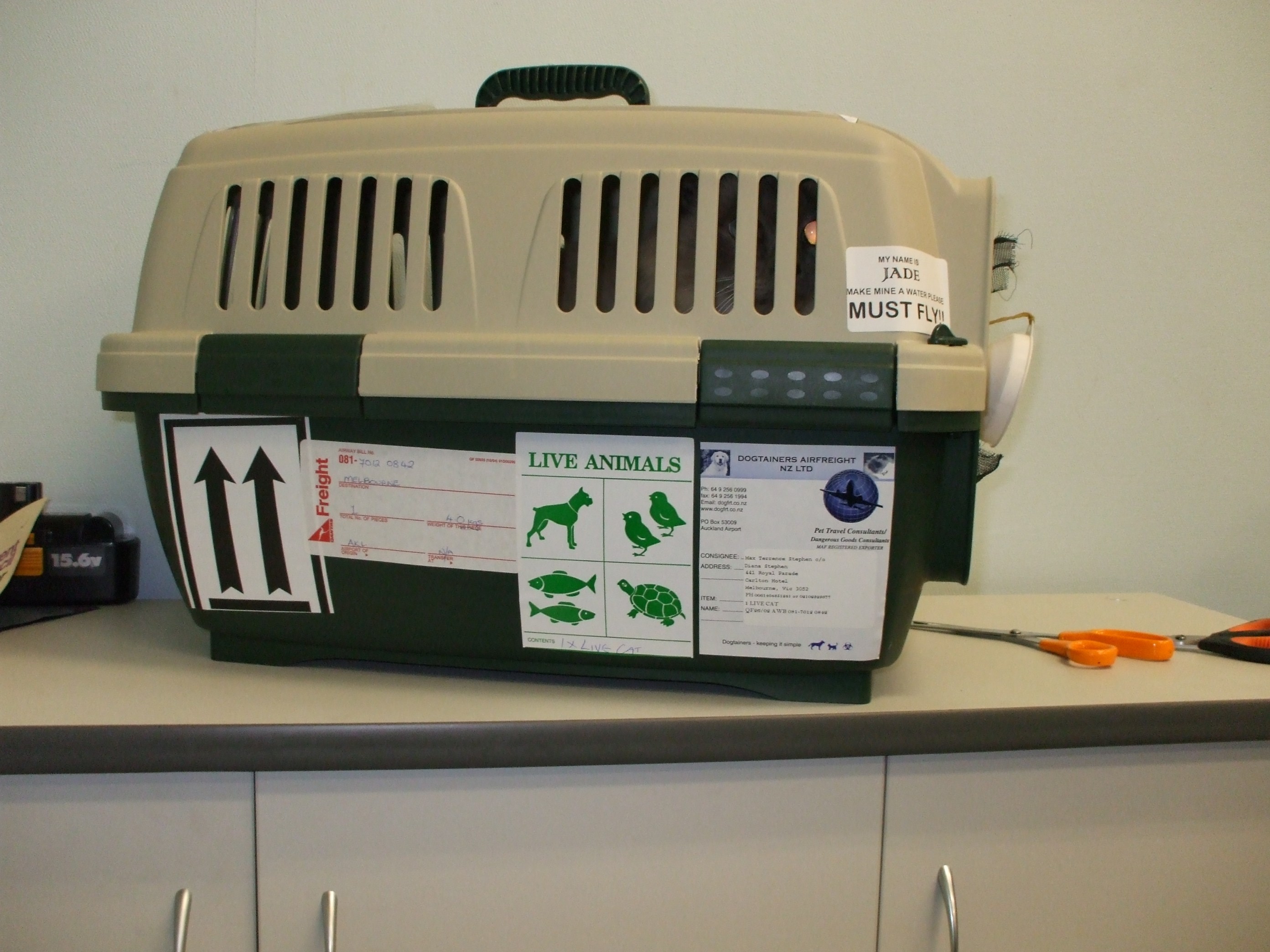
The same make and model of a basic, hard-sided carrier. In 2002, cargo was often mandatory for live animals and a hard-backed carrying case was essential. Pets now travel in the cabin as long as they can fit.
No matter which airline you choose, or where you’re going, finding a carrying case should be your very first priority. Make sure you have a suitable kennel for your pet to travel in. It must be comfortable enough for your pet to stay in for extended periods of time.
Some airlines will not allow you to fly your cat as cargo due to weather or space constraints but insist that your pet is in the cabin with you. This is a preferable option, as the cargo hold can be cold and cramped, and is usually reserved for larger pets like big dogs.
After taking these things into consideration, you are ready to book your flight.
“Plane” Ahead
Before you book your flight or flights, consider your feline friend. What is their general disposition? Are they young or old, quiet or active?
An energetic or noisy cat might be better flying as cargo but an older, calmer cat can stay with you in the cabin.
Can your cat stay in one spot for a long period of time, perhaps with only a small toy, water, and the occasional snack?
Virtually all airlines allow pets but not without restrictions. It’s generally easier to get a cat on a plane than a dog, as they are smaller and have fewer cultural stigmas.
Contrary to popular belief, airlines almost unanimously request that you not sedate your pet. Sometimes a calming medication can have the opposite effect if the animal is panicked or in an unfamiliar place.
Sedate your pet only if your veterinarian recommends that you do so. Many airports have pet-friendly areas that you and your pet can use to rest between flights. Some charter or “no frills” airlines still do not allow pets at all because of space and baggage issues.
The major carriers usually have all choices available. Your cat can travel in the cabin with you, in the luggage compartment if you go on the same on the same flight, or departing as cargo on another flight.
Certain carrying equipment and accessories will be mandatory in transit. You will be required to purchase them on the road if you don’t have them, which will be more expensive and cause delays.
Visit the Vet
Getting your cat’s health checked by a vet and officially certified are two of the biggest steps you and your cat have to take.
Aside from the documents for customs, the airline will require their own documentation that describes the cat’s vital statistics (weight, age, size, color) and confirms that it has a clean bill of health. Find these vital statistics by using the equipment at the veterinarian’s office instead of your scale at home. Measure the length from the tip of the tail to the tip of the nose, and the height from the floor to the top of the shoulder, and obtain written confirmation regarding your pet’s measurements from your vet.
Ask your vet about motion sickness medication for your pet even if they are a seasoned traveler. Try to choose something that won’t sedate them. Get as much documentation as possible regarding vaccinations, chronic conditions or surgeries.
Up-to-date rabies shots are required for any cross-border travel and may also be required by a motel or other kinds of transportation.
Most airlines will only require certification of a recent vet examination and confirmation of rabies shots as a health certification. This will most likely need to be accompanied by a similar certification from a government agency, such as the FDA (Food and Drug Administration) or the CFIA (Canadian Food Inspection Agency).
Island nations such as Japan, England and Australia are notoriously strict and will require at least a few weeks of quarantine regardless of your preparations.
Countries like South Korea, Canada and Mexico have minimal requirements of rabies shot and a clean bill of health. The US is also very accessible with the exception of Hawaii. Check with the embassy of the country that you wish to visit for the exact forms and regulations.
Follow these steps to the letter. Failing to do so might result in you and your pet being turned away, or even worse, your cat could be euthanized. Avoid this nightmare and be prepared!
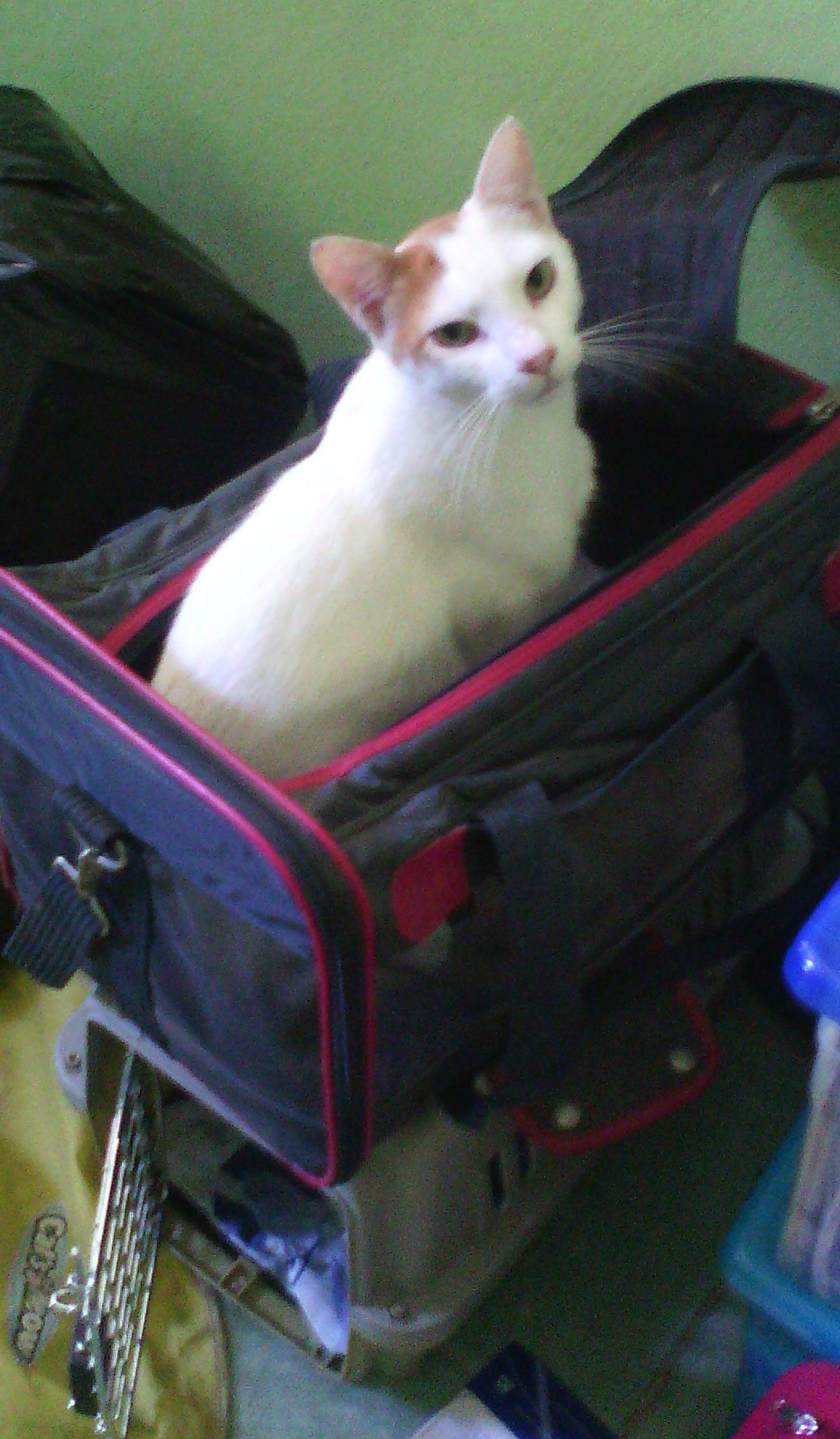
Pangur Ban, always an enthusiastic traveler. He’s sitting in a soft-backed carrier that’s the required size for a trip with you in the cabin. The hard plastic carrier below can also fit under an airline seat.
Purry Landing
Make sure that you have the proper paperwork on hand if you are crossing an international border. You should have at least two copies of each.
Bring a supply of any medications or special food your pet needs. These might be difficult to find depending on where you’re going.
Rent a car with a pet-friendly company to avoid dealing with trains or public transit, which usually do not allow pets unless they are working animals. Uber or other rideshare programs also have these options.
Consider your arrival arrangements carefully. Determine if you will need a hotel and for how long. Budget carefully, as motels often require pet deposits, and pet-friendly rooms can be more expensive.
You will be required by the motel to provide a contact number to confirm your reservations (this will also be required by the airline, if applicable) and details regarding your furry friend, including its measurements and weight.
There are many reasons to take your cat with you when you travel.
Perhaps you are taking an extended vacation and your affectionate, sensitive feline companion can’t bear to be left alone. Maybe you’re taking an employment contract overseas that might last months or even years and you can’t bear to give your best friend away.
Fear not, as your feline friend is now welcome in airports, planes, and hotels as long as you stay informed and plan ahead.
Mexico has a number of famous tourist destinations, but there are still many mysterious places off the beaten path that are waiting to be discovered. Zipolite, also nicknamed “the Beach of the Dead” is one of those special places. Get there before the modern world gentrifies it into one of these charming and fashionable “magical towns.”
Zipolite
Playa De Amor and Roca Blanca
Playa ZipoliteRoca Blanca and Palapas, Playa Zipolite
There are probably thousands of beaches in Mexico, but this is the only one in the entire country where nudity is permitted and cannabis is openly smoked by both locals and tourists. Local vendors sell a wide variety of curiosities and handmade treasures. Buy crystals and glass pipes, get a henna tattoo, or indulge in a massage with scented oils. The nightlife is more than decent considering the size of Zipolite, and clubs and bars have names like “El Hongo” (the mushroom). The legacy of the first hippy tourists is alive and well between Playa de Amor and Roca Blanca.
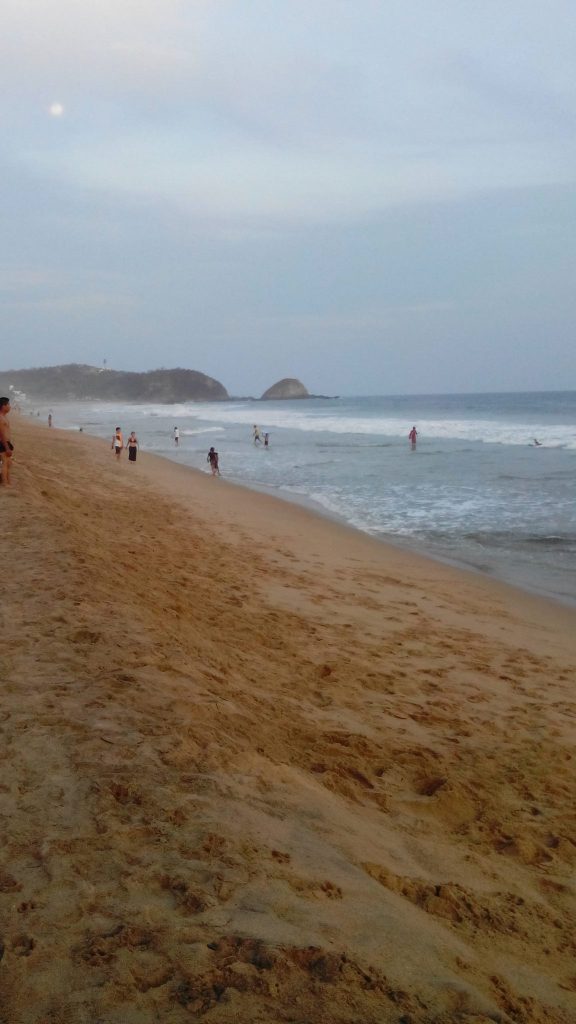
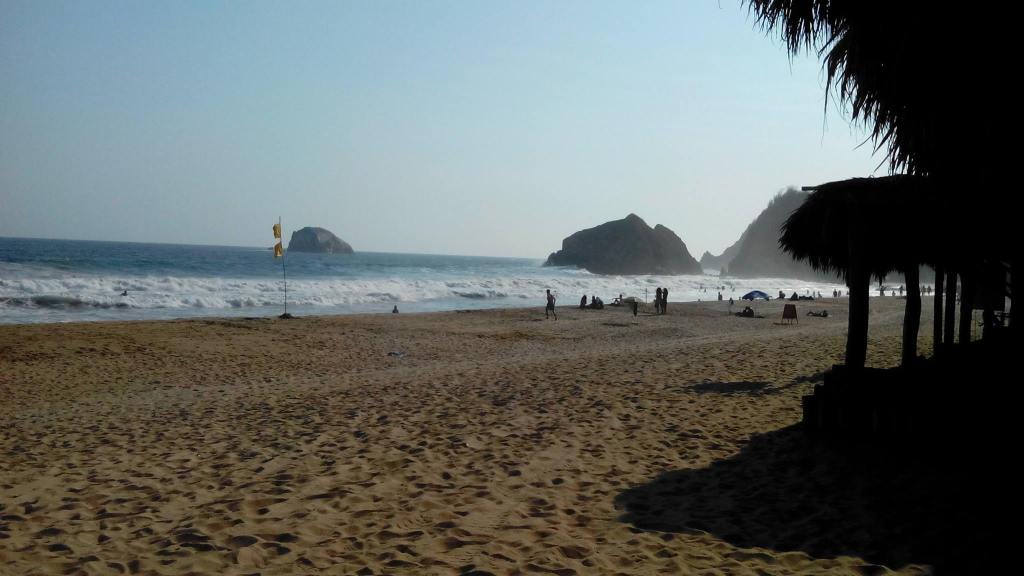
Zipolite is not a big place, but the beach itself is vast and open, clearly marked by Roca Blanca in the west and Playa de Amor in the east. Roca Blanca simply means “white rock” and that’s exactly what you will see on the north end of the beach. This is a haven for seabirds and they’ve branded their personal space in their own distinctive way. Most of the shops, stores, tour guides, bike rentals, transportation, paved roads and other amenities are on the Roca Blanca side of Zipolite. Closer to Playa Amor you’ll find a quieter neighborhood with a soccer field, a quaint seaside church, and a children’s playground along with a few small shops and a relatively peaceful residential neighborhood.
Playa de Amor is the small, sheltered alcove at the very end of the beach on the eastern side. You have to climb a steep stairway to get there but it’s not a long one. In the high season, there’s a small restaurant perched on the top of this rocky outcropping where the stairway dips back down towards the ocean. This tiny beach is hidden in a little cove between two steep hills. There are actually two or three secret little beaches near this spot, and rip tides here are virtually non-existent, so it’s a nice place to safely swim. The rest of the beach is marked with yellow or red flags to denote safe swimming spots. The undertow is no joke and will often shift with the tides, winds, or time of day. Enjoy the ocean but be confident in your swimming skills, listen to the lifeguards, and bring a friend.
The End of the World
The southern coast of Oaxaca was virtually untouched by tourism as late as the 1960s, when the first hippies headed south looking for a counterculture haven. They found it here, on a pristine beach that had neither bank, cop shop nor boat launch.
The name, Zipolite comes from the local indigenous Mixtec language and has two possible meanings. The first, which has become a part of the local urban legend and the area’s nickname, is “the Beach of the Dead.” The beach is uncrowded and virtually free of boats because of the dangerous and unpredictable rip tides that make navigation difficult and swimming dangerous. The second meaning, considerably less romantic and therefore likely more accurate, is simply “the place of many hills.” The latter is also accurate and makes for some inexpensive lodgings that still have a first-class view.
The geography of the area, including the ocean itself, also contributes to the ethereal feel Zipolite seems to have. Unlike the beaches to the north, which face west across the Pacific Ocean, Zipolite faces south. To head straight out from Zipolite would take you not to Hawaii, Asia or New Zealand, but to a vast expanse of virtually nothing, at least until the wastes of Antarctica.
The locals share all kinds of stories about the ancient history of the beach and those that were fortunate enough to find it before the days of highways and airplanes. One tall tale is about the ancient Nahuatl people. They were aware of this isolation on some level and would come here to offer sacrifices to the gods of the dead that lived past the end of the world. How true that may be has been long lost in the riptides of time.
I tell the friendly camionetta[1] driver that I don’t need directions, and he’s surprised at first.
I smile and mime smoking a joint. Now he understands, and gives a hearty wave to incoming traffic as we pull back onto the highway.
The folks who know Zipolite know it well.
No rush on this journey. I’m high already. The few hits I took of that nice fat roll before I left Puerto Escondido an hour ago are just starting to wear off. I’m looking forward to a pleasant come-down on the next leg of the ride, which consists of an old truck careening through the jungle. It’s scenic, breezy, and social. The perfect metaphor for life on the Oaxacan coast.
This region of Mexico has yet to see development on the scale of other notorious cities. You’ll still hear sad stories about how Tulum went from fairly rugged and peaceful to a gaudy tourist trap in less than a decade. People curl their lips a bit when they mention Acapulco, about 8 hours up the coast in the neighboring state of Guerrero, but it doesn’t have the history to be any real competition.
Tourists come to Oaxaca on local terms, with means no fear of shameless authenticity and a quiet, steadfast mindset that rejects gentrification. There is little grace for the white man here.
Don’t like the rough roads, menus in Spanish only, or showers with no hot water? Here’s a bus ticket to the Yucatan Peninsula, snowflake. And don’t let the door hit your pasty ass on the way out.
The transportation I regularly take from Puerto Escondido is what folks back home might refer to as “a chicken bus.” And yes, I have seen chickens on it, along with dogs, cats, and sometimes huge bushels of fresh produce.
I have yet to see a bale of fresh weed, but hope springs eternal.
The junction of San Antonio is the first place I change buses. It’s about an hour and 15 minutes east of Puerto Escondido. For those coming from Huatulco, it’s about the same distance, but you’d get off at the crucecita[2]of Pochutla instead. Take another camionetta through the seaside town of Puerto Angel to reach Zipolite.
Private taxis are also available but coast a lot more. It’s easy to get used to the more economical public transit system if you spend a lot of time here, and I do, so the whole trip from Puerto Escondido to Zipolite takes less than two hours and costs a total of seventy pesos. That’s less than five US dollars.
Excellent. More money for the deadly triumvirate of seafood, cerveza, and cannabis.
The Road to Zipolite
The ride from Puerto was fairly comfortable. I shared a seat with a commuter from Pochutla. It’s common to chat with total strangers on buses here and it took some time for introverted me to get used to it. My travel buddy heading back to his family home after doing some work in Puerto, and jokes that he wasn’t sure if he should talk to me at first, since guerros don’t like to talk to strangers. But the time passes more quickly, don’t you think?
When he finds out where I’m going, everything makes more sense. Only long-term residents and serious tourists can find Zipolite.
I walk just a few meters past the junction to find some shade while I wait for the next ride. I’m not alone for long. An older lady with a plastic tub and a cooler filled with snacks, drinks, and other edible goodies is waiting as well. She’s heading to the beach to sell her wares to stoned and thirsty tourists, and I’m pleased to give her a head start. I happily purchase a bag of roasted peanuts. They mix them with a combination of dried garlic, peppers, and salt. Rich, oily, and crazy delicious.
I caught a buddy of mine throwing out the dried garlic cloves once. Good thing he brought me some amazing hash because I just about killed him.
We’re soon joined by a few other tourists as other buses and taxis drop folks off at the nearby junction. The little camionetta is already full when it comes by, but this is Mexico, where there’s always room for one more. After a moment of everyone working together to rearrange the bags and make a little space for me and the Peanut Lady, we’re off.
It’s standing room only, which is fine, as I’m near the front of the truck and have a clear view of the road ahead. The first leg of the journey takes us past a few lush fields and open ranches, then we make a few sharp turns and the jungle closes in around us. We’ve recently had some heavy rain, so the trees are thick with leaves and the air smells like wet earth and fresh flowers. My sense of smell is heightened while I’m stoned, which can be good or bad. Right now, it’s glorious.
There are several stops along the way, but the first real city we reach is magical Mazunte. Seriously, this is one of Mexico’s “Magical Towns” and it’s the closest thing to a tourist trap in the region. I think of it as gringo flypaper. Most folks who don’t know any better stop here and never go any further west, and that’s what I’m thinking as I watch virtually the whole camionetta disembark.
Good, I think. Fewer people to mess up Zipolite.
Mazunte is nice, but that’s the problem. It’s a haven for hipsters, cruise ship passengers from Huatulco, and rich folks looking for yoga retreats and vegan restaurants. There’s some great shopping here, I have to admit, and when I have some extra cash I indulge in the upscale clothing, cosmetics and sometimes a new pipe.
Today, however, I’m happy to let others enjoy Mazunte while I move on. The last stop in town is by the Turtle Museum, where one person embarks to keep me company on the road to Zipolite.
Like me, this scruffy gentleman has lived in Mexico for a while. He looks like he’s been here since the 1960s and from the odor it’s possible that he hasn’t bathed since then, either. Now that sense of smell isn’t so fun.
He’s holding a fat, oily roach in his hand, which he smokes as he stands on the edge of the bumper, and the heavy purple cloud helps masks the perfume of an old school naturalist. I nod and smile, too overwhelmed with respect to let the smell bother me. It’s because of people like him that Zipolite is what it is.
The Beach of the Living
He offers me a haul, but I can smell the tobacco mix and politely decline, explaining in English, “That’s not how we roll them in Vancouver.” He smiles and laughs, a slight British accent showing through his reply, “Oh, the organic! Good show!”
In the hippy heyday several decades ago, there was virtually nothing connecting the Playa Chica to the outside world. There are legends told about the single dirt road that led to Oaxaca or the occasional boat that would leave from Puerto Angel or Huatulco, but that was all. The neighborhood of Zipolite stayed isolated longer than others. The dangerous currents that surround the beach make it too awkward to land a boat, so any water transportation was also extremely limited.
Despite that, a few intrepid foreigners who loved the alternative lifestyle managed to find it in the late 1960s. They brought with them cannabis, nudity, tolerance in general and an appreciation for a simpler way of living. The legacy endures for others that would follow.
The camionetta turns down a gentle curve, and here we are just outside of Zipolite. I used to get off at the crucecita bit further down, but then discovered a back lane that takes me to the main street a lot faster.
Old Hippie waves as I hop down. He lives nearby, but today he’s heading to Pochutla to find a bank machine.
I call it the back lane, but I have no idea if it has a real name or not, or even if it is a lane. It’s used as a road in the dry season, but it spring turns into a muddy river bed. It used to fork off to the right, but after a tree fell across it during a spring storm a few years back the locals are used it as a foot or bike path. It explodes into a nest of rich yellow flowers every few weeks, which also might be why the locals haven’t moved it.
Bike tracks and footprints line the narrow path that leads behind it. Sooner or later, some motivated local with come down here with a chainsaw and collect some firewood.
I pass a few hostels, houses and shops that start to peek out of the jungle. Most people recognize me from previous visits and wave from their front windows. It’s early summer and the tourists that saturated the place a few weeks ago have gone home.
The paved road opens up to the street known as Adoquin, and up until three years ago it was the only paved road in town. There’s no shortage of upscale hotels here but only if you know where to look. The nudist and naturalist community love Zipolite, and there are more than a few places that welcome the lifestyle.
If you’ve seen the film, “Y Tu Mama Tambien” then you’ve seen the expansive Playa Zipolite. Great for selfies but not so much for swimming. The deadly currents that prevent the construction of a boat launch make for ideal afternoon surfing but are deadly for swimmers. It’s theorized that the people who lived here in ancient times actually used the strong undercurrent to dispose of their dead or offer them to the gods, leading to the theory that zipolite is an ancient indigenous word that means “The Beach of the Dead.”
That also might be why hardly anyone wanted to live here.
To combat this problem, a group of volunteer lifeguards was formed in 1995, cutting the mortality rate in half. These guys are still here and they’re the backbone of this beach. I’ll be visiting them soon. They’ll save your life in more ways than one.
I’m not staying the night this time around, but I’ll stop by my favorite posada[3] and greet the owner.
Lifesavers
I turn right at the sign with the whale, and I’m on the beach. The little hotel forms a square archway. I walk through it and find my friend lounging in one of the many hammocks. As usual, he’s accompanied by a thick bit of pulp fiction and a thermos of iced tea.
“D!” I extend my hand as I greet him. “Long time, no see!”
This is a joke. I was here about ten days ago.
We take a few minutes to get caught up. He’s planning on heading north again soon. D. is originally from California, and he loves cannabis just as much as I do. He’s been here since the 1990s, when the place was still mostly virgin forest, and he was the first person I met in Zipolite.
The concierge always has a nice fat joint waiting for me when I arrive if I’m staying the night. This time, it’s just a day trip for lunch and a bag of green goodness. D. has a special treat today anyway. He digs into the fridge and brings out a plate filled with brownies.
“I know you’re more of a smoker,” he grins with mischief, “but a friend of mine made these, and they’re exceptional.” He wraps two into a paper towel. “Take them with you. Nice for the bus ride!”
I thank him profusely as we walk back to the hammocks. Now it’s time for me to head next door and get down to business.
I’ll call him Jesus, as I consider him to be my personal savior. I’m sure there are others that think of him that way in a literal sense. If Jesus had a peso for every distressed swimmer that he’s pulled out of the deadly riptide during his career as a Salvavida[4], he could pay for Trump’s border wall all by himself.
When he’s not cheating Death, he’s selling weed. I stand by my belief in his divinity.
Of course, Jesus has his chosen Disciples. The dangerous nature of the ocean means there’s a whole team of Salvavidas and if he’s not here there’s always a kind friend to help you out. Today it’s fairly quiet and Jesus is here with the apostles Matteo and Juan. Matteo has a frisbee on his lap and is rolling a joint, because that’s how you roll a joint on a breezy shoreline.
Juan and Jesus are discussing some surfing later and Juan is motioning towards the Roca Blanca side of the beach, so he doesn’t notice me right away. Matteo sees me first and greets me before handing me the frisbee and offering me his seat. It always gives me a secret joy to see these rough surfers in their board shorts and tattoos being such perfect gentlemen.
He knows what I need, and since it’s not a busy day on the beach he can grab it for me while Jesus and Juan keep an eye on the swimmers. I’ll finish the joint while I wait! Gracias amigo!
By now, of course, Jesus and Juan turn and say hello. They call me Maestra, I reference to my career as an English teacher. It’s what originally brought me to Mexico. When I first started coming to Zipolite I worked at an Oaxacan university about four hours down the road. Juan has pretty decent English and he likes to practice every chance he gets. And there are many chances, since the whole world comes to this beach. Jesus speaks some English and French, but he and I usually speak in Spanish.
Life is basically good, but they have concerns. The mafia comes sniffing around once in a while and limits their ability to sell. Jesus has a good relationship with the local cops, who look the other way for the most part, but there’s always the federal guys and of course, someone is always on the take. Sometimes they sell openly while other times things have to stay quiet. At the moment, it’s a bit of both.
The drug trade is big money here, especially in the high season, and the local organized crime is always trying to get a piece. The Salvavidas know I come here so I can buy weed outside of the crime element. Luckily, Zipolite is well protected by a small, close community that’s more like an extended family. They were here before the mafia, the police, or even the road, and the organized crime thugs at least have some respect for that. There are warnings, sometimes some harassment, but no deaths or beatings. Independent dealers in bigger cities are not so lucky. That’s another story.
I finish rolling. The joint is impossibly fat because I had to bust up the greasy buds with my fingers. Jesus proudly proclaims that he grew this himself on his patio. Totally organic and perfectly flushed, this is his own secret stash.
The thick blue smoke rises from our circle of plastic chairs. It sure beats the hell out of that skanky overpriced “Oaxaqueña” that I find in Puerto. On the other hand, the low-quality of the city weed has been a strong motivation to get the cannabudder recipe right.
Matteo returns with a small bag filled with delicious weedy goodness. I roll another joint from the weed from the bag. It’s the same stuff as the frisbee joint, which doesn’t happen often. It’s low season, Jesus explains, so he can break out the good stuff for the regulars.
As if listening to a sound that only he can hear, he stops speaking and turns quickly back towards the shoreline. Someone is in trouble, might be a surfer or a swimmer.
Juan is already grabbing a flotation device, and his whistle is clenched between his teeth. All three bolt out from under the palapa[5] without another word.
I don’t take it personally. I hear the lifeguard whistle sound as I find a place on the beach to stretch out and get some color, free of a pesky tan line. Matteo won’t mind if I keep the frisbee for the time being. I’ll get another joint ready for their return, and my mind turns to thoughts of shrimp cocktails and beer.
This is Zipolite, the Beach of the Dead. Bring your gay partner, a bag of weed, the dog, and your bare ass. All are welcome. A true paradise on Earth.
Enjoying Mexican food means eating and cooking with peppers.
It’s common to see the chipotle and jalapeno varieties these days in some Canadian cities. I wouldn’t be surprised to see one in a specialty store in Vancouver. Even the bigger chains like Safeway would have the trendy chipotle version.
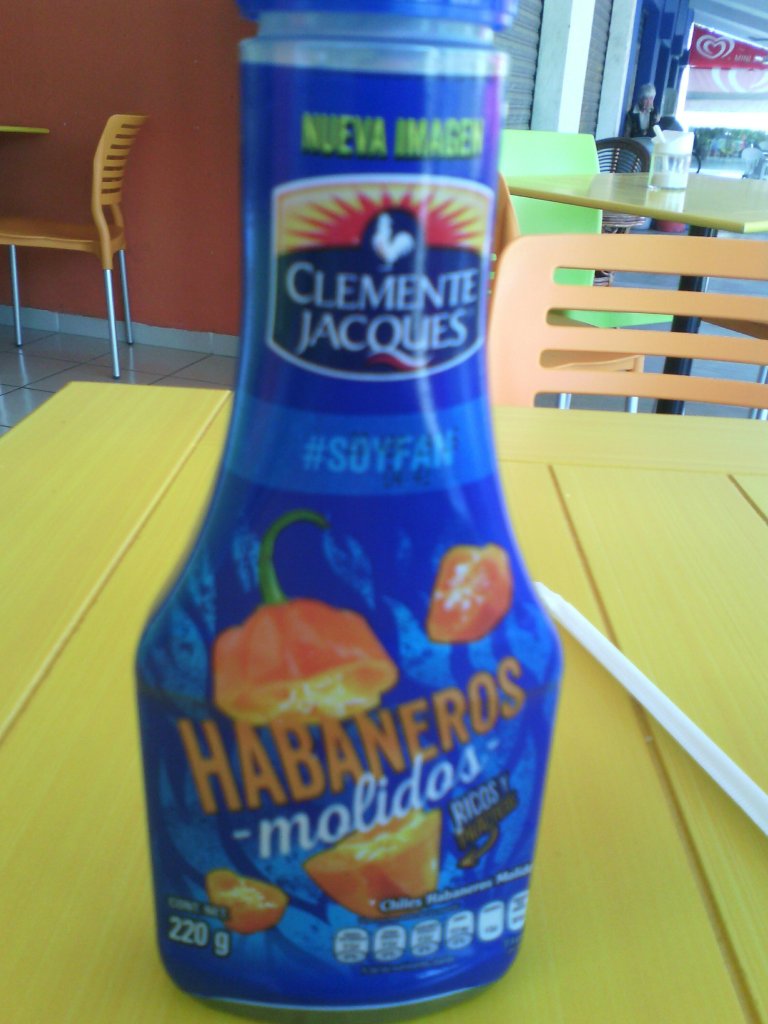
The habanero-mayo is one I’ve only seen once anywhere in Mexico. This was the only size I saw them in, and that’s all you need.
First, I like these jars. They make excellent shot glasses and are great for storing smaller things like tacks, paper clips, and loose beads.
If you find this and want to add some spice to your egg salad or chicken sandwich, be careful. I tasted a bit just as a test and the level of picante made my tongue painfully numb for several minutes. In case you didn’t already know, this happy looking pepper is notoriously hot. The cheerful red, orange, yellow, or even pink habanero pepper hides a brutally high measurement on the Scoville index. This volcanic, molten magma lump of spiciness pretending to be a pepper makes the humble jalapeno cry in shame.
Capsaicin, the chemical that makes peppers hot, has some interesting medicinal and recreational uses. The endorphin rush that goes along with the painful spicy flavor is used for pain relief for some and just for crazy fun by others.
This chemical is so badass that it attacks cancer cells and clears the phlegm from your sinuses. Your metabolism will speed up just to get away from it.
Use the same precautions with habanero mayo as you would with the actual pepper in its raw form. Anyone who has suffered the pain of “jalapeno hands” will tell you that those rubber gloves are worth it no matter how stupid you feel at the time.
Just for the record, I tried all of those home remedies at that link during our Christmas Chili Cook-off. None of them worked. That was just serrano and jalapeno peppers, so imagine how painful habaneros would have been. I wasted a lot of decent rum and yogurt, too.
If you happen to be in Puerto, check out the 6-17 Minisuper next to the gym. his little bodega has been here for years and has all kinds of crazy crap.
This store looks the same as other neighborhood bodegas, but it seems to carry a wider variety of condiments and preserved food in jars and tins. A worthy place to visit in case you’re looking for capers, pickles, olives or other such goodies in Puerto Escondido.
Updating this post to include another discovery, habenero salad dressing. I saw this at a quaint cafe on Rinconada today called Latte Chocolate. Awesome sammies and amazing loose-leaf tea, by the way.
I said I hardly ever saw this. Now, it’s haunting me.
My Easter Season started a few weeks ago. On March 9th, I came to school for class and was pleasantly surprised to find that the regular schedule was suspended to celebrate the Festival of Saint Photina. The students had mixed a few big batches of “flavoured water” (also called “aguas frescas” in other parts of Mexico) which they were serving to the teachers and younger students from the Primary and Kindergarten side.
There were some really nice varieties, including classic favorites like pepino-limon and jamaica along with several creative horchatas. I think it was still the usual rice base but it included papaya and walnut, too. After the teachers and younger students had been served, the students moved the large tubs to the entrance of the school and served free refreshments to passers-by.
Eventually I asked another teacher if there was any deeper meaning behind all this sitting in the shade and enjoying cool drinks when we should be working. It turns out there is.
The original aqua fresca.
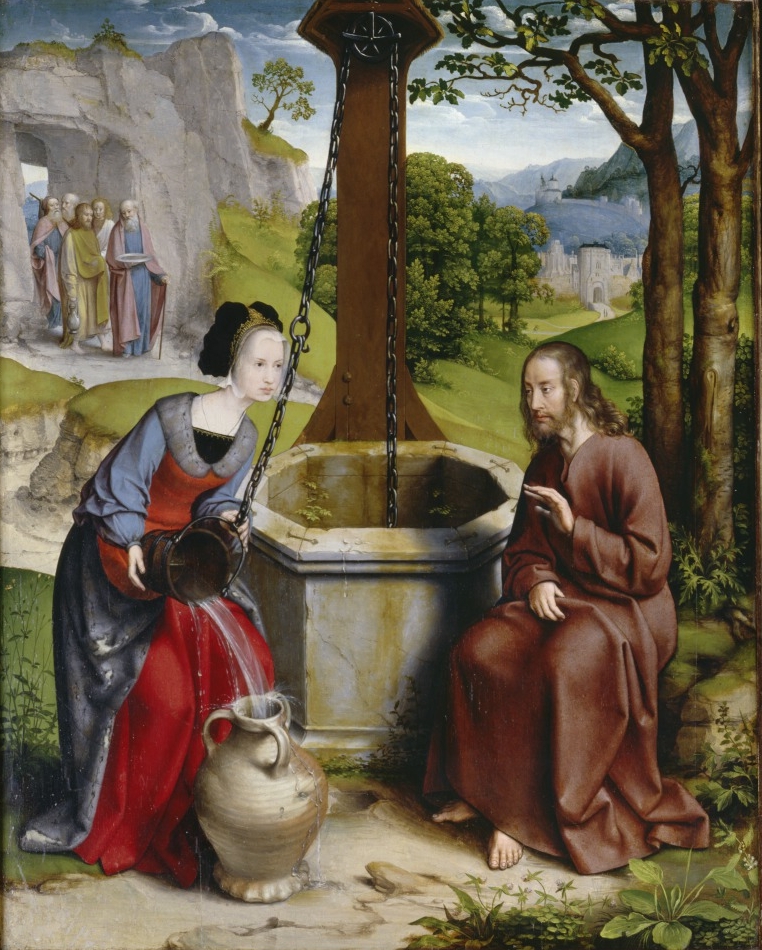
Every Friday that is part of Lent has a special meaning, especially in Oaxaca. This Friday March 9th we were celebrating Saint Photina. This festival is unique to the state and not commonly observed in other parts of Mexico. She met Jesus at a well during his journey to Jerusalem, and according to the Gospel of John, the two had an honest and intellectual discussion about spirituality and thirst after she helped him draw some cool drinking water from the dangerously deep well.
Then she converted to Christianity. Not only that, she converted her sons and the whole family went on to travel the world as evangelists before being martyred in Carthage. Legend has it they threw her into a well, a great example of an ending that would never work if you tried to include it in a fictional story, which leads me to believe it might have actually happened. And Christianity is all about how many people you convert and how painfully you die, so she’s pretty important.
Aside from being the inspiration for our school party, Photina is an important figure in Eastern Orthodox Christianity and Asian feminist theology. If you’ve ever met a “Svetlana” you’ve met someone who was named for this saint.
Our students were essentially recreating the meeting of Jesus and Photina. Some of the lessons learned during these non-class hours include welcoming strangers, sharing what you have, and being hospitable and friendly in general.








 Cristina in Oaxaca