It’s there at the same time every morning, just like I am. Of course, totally unbothered by the cold.
Dante described a layer of hell as a frozen wasteland, where the cold was used to torture instead of fire. The damned were frozen up to their necks, traitors to trusted friends and allies, and I agreed it was a suitable place for such wretched sinners.
My own sins were unknown to me. But I suppose the damned always say that.
I can’t ever see its face, so I don’t know if there’s really a skull or what underneath that hood. He turns this blank, unmarked void in my direction as I trudge to my assigned place.
“You’re late,” the voice is monotone, tired, but hopeful. Even the deity itself doesn’t know exactly when those yellow lights will shine through this white darkness. It raises a bony hand clutching an hourglass up to my face.
An angry schoolmarm trapped in the body of a mythological menace.
“You’re early,” I reply with my best sneer, but my bravado is hiding a real sense of fear. I pretend I’m not using my side-eye to peek down the street.
Looking for the lights. I couldn’t have missed them. Maybe they’re late, just like me.
The hourglass disappears, and it turns away, droning on. The voice he has today is gruff and fuzzy, like an old man grinding through the channels on a ham radio.
“Same drill as always,” it sounds bored. “Five minutes late, I take two of your fingers. Ten minutes, four more, along with your ears and nose.”
It is bored. So am I. Years of this. But it has to tell me, just the same. Divine protocol or something.
“Twenty, and you never have to go to school again.”
The statement ends with an uneven hiss that might pass for laughter in Hell.
“Burning in hell doesn’t sound so bad at the moment,” I stamp my feet, a combination of a tantrum at the unfairness of it all and the will to keep from dying.
The yellow light is weak, but cuts into the void. Two lights brighten on the street, and two others, red with authority, join them in banishing the creatures of the cold.
There wasn’t so much as a whisper. Death was gone. At least for now.
Better luck tomorrow, I thought, and was not entirely dishonest. It would be better to die, cross the river Styx, and be frozen in a pile of stinking mud than go home and tell my mother I had missed the bus.
I ascend into the school bus, all ten fingers intact.
The kettle screams like two broken sheets of ice rubbing against each other in the frigid water. No amount of wool and cotton coverings can shield me from that.
Still groggy with dreams, I twist my body towards the window. The early morning is lined with frost and bright with stars and snow. The windowpane is so cold it feels like it could cut into the palm of my hand.
The thick woods nearby are blurred and dark. The lights of the distant road shine against the snow and ice. Sheathed in layers of soft flannel, I stumble to the kitchen and remove the hysterical kettle from the electric element.
It still emanates heat for a few minutes and I stand as close to it as possible, shivering. My mother, the enabler of the boiling beast, appears fresh from her morning jog across the new layer of snow. The very thought of this offends the warm Mediterranean blood that I inherited from my father. I dream of his sunny homeland as I wrap my hands around my steaming mug, which I habitually drink with too much sugar. My mother enjoys a bitter cup of plain tea as she informs me that the cross-country skis have already been waxed. It is far too early to worry about such fashionable frivolities as matching mittens, especially in this dark little corner of the world.
I find a mismatched ensemble of outerwear. By the time I step outside to strap on my skis, my fuzzy extremities are already slightly damp with sweat. The sky has taken on a streaky orange tone and the evergreen outline of the nearby pine forest have become much clearer, cutting into the auburn clouds. The steam is rising in plumes from my mouth but the goo inside my nose is stiff and not quite frozen. I twitch it, like a rabbit, testing the air. It is not too cold to snow.
I stab my poles ferociously and begin to glide forward. The way is familiar and I barely look up. Soon layers of snow and pine needles have closed in over my head. The hum of the nearby streets and power lines disappears as my feet glide down a long dark tunnel of scaly bark and frozen sap.
Every so often I catch a movement from the corner of my eye, and even though I try to tell myself that we are much too close to human habitation to encounter bears or wolves I feel my pace quicken. To emerge from the shelter of the trees is always a tense moment. I expect to feel a sudden, harsh wind to whip across the frozen river and numb my lips and eyes.
This morning the weather is merciful. There is no wind and a light snow is beginning to fall. Even with the scattered grey clouds the glittering white landscape is too much for my dilated pupils, still burning from sleep. My skis slip easily into the tracks made by those who came before me. They branch off at various points along this icy highway; residential homes, the junior high school, the outdoor hockey rink, and finally, the cemetery. I stop for a breath of air by a pile of black and grey marble lined with crusts of snow and icicles. As I peel off my toque and loosen my scarf, a chickadee sings a cheerful morning greeting and his voice echoes hauntingly at the edge of the dark wood. In passing it occurs to me that I would have to kill him and his entire family just to make a decent side dish.
The freshly fallen snow has turned the sidewalk into a mass of brown slush and the skis will move no more.
Years later I sit under the hazy heat of a bustling Asian city. The wind has grown cool as the autumn wanes into winter, and I dream of the day when the soft snow will kiss the city’s smoggy lips.
Full disclosure – I wrote this almost 20 years ago now, and even though cannabis is now legal in several US states and on a federal level in Canada and Germany, it’s more important than ever that the Drug War ends.
The current US administration is filled with alcoholics that are using the Drug War as a pretext to kill people of color. Those boats getting blown up in the Eastern Pacific aren’t too far away from my own doorstep.
How many people has the White Empire killed using fentanyl as an excuse? Meanwhile, the Sackler family walked free after agreeing to a meager settlement.
END THE DRUG WAR NOW.
The Emerald Circle
It’s been 79 years since the Marijuana Tax Act was passed in 1937. Recent decades have shown some progress and finally, the facade of Prohibition is starting to fall apart.
The Canadian legalization process took decades but was ultimately successful and recent rulings in Mexico have opened up the road to nationwide legalization. Success in the United States has mostly been at the state level. Efforts of anti-Prohibitionists to counter this alarmist and misguided social policy with facts, studies and logic are finally reaching the federal government.
As legalization progresses, what is the next step? Further education of the general public? Decades of misinformation have taken their toll. “Reefer Madness” continues to be a stumbling block to the commercial success of cannabis.
Proponents of cannabis legalization are heavily focused on the results of their efforts. The movement focuses almost exclusively on a result, the legalization of marijuana.
Instead of trying to break or damage the Prohibitionist ideology, the legalization movement should build another ideological system. This competing system will empower marginalized groups by demonstrating what they all have in common and appeal to even the most reefer-mad voter.
The Why, Not the What
Logically, the lies that prop up Prohibition should be successfully countered by the truth and hard facts.
Prohibitionists don’t care about the truth or the facts. They continue to ignore them. What exactly do they care about, and why?
Prohibition advocates are more focused on the efforts they make to achieve the result. This is why they are not affected by the logical assertion that “Prohibition simply doesn’t work.” The results of Prohibition are not as important as the efforts made towards achieving that end.
It is the effort that drives the Prohibitionists, not the result, and this effort relies heavily on a system of belief that will never be swayed by facts.
“It’s not WHAT they do. It’s WHY they do it,” Simon Sinek asserts in his TED Talk, How Great Leaders Inspire Action.
This lecture is more about marketing and product positioning than civil disobedience, but Sinek uses inspirational civil rights leaders like Martin Luther King Jr. to help illustrate his point. His “Golden Circle” is constructed based on what motivates people and why.
It’s the why that’s important, not the what.
Every lie the Prohibitionists tell themselves and the rest of us about pot aren’t really about pot at all. Every myth about cannabis for recreation or medicine that Prohibitionists use is connected to a bigger picture, and ideology driven by very basic human emotions, the greatest of which is fear.
When a Prohibitionist sees the green marijuana leaf, it is not a literal depiction of a plant to their eyes. It is a symbol their worst fears. Some common, non-specific fears are fairly obvious, like the fear of terrorism or poverty.
Other more intangible fears include the fear of competing ideologies. For example, environmentalism stresses a world that is not human-centric. Socialist policies stress the good of the group as opposed to the individual.
The leaders of the Prohibitionist movement insist that marijuana is the source of many, if not all, of these real or imagined threats. The anti-Prohibitionists have this backwards. Most of the dialogue of the anti-prohibitionist starts with the “what” – the legalization of marijuana, which is the ultimate goal.
But why are we doing it?
The Circle Template
We can view the Prohibitionist ideology of fear in a simplified form using Simon Sinek’s “Golden Circle” diagram as a template.
Why – to protect you from all the bad stuff in the world (crime, poverty, terrorism, sickness, sin),
How – by doing everything we can to eradicate this plant, which is the source of your horrors, and punish anyone who touches it,
What – marijuana prohibition.
As overblown as the “why” claim sounds, it succeeds by appealing to the most basic and childlike needs and desires of every human being alive. It simplifies complex problems and blames a single, outside entity for them, real or perceived.
The “why” encompasses the purpose, cause and beliefs of the Prohibitionists.
Because without marijuana Prohibition protecting us, terrorists and criminals would swarm over society in days, leaving us completely powerless. We just can’t take that chance!
Another fringe benefit of the fear factor is that it gives the Prohibitionists the impression that they are constantly being attacked by these malevolent and insidious forces, which justifies their aggression against their opponents as a form of self-defence. This is how Prohibitionists justify harassing otherwise harmless people who are clearly not criminals.
This also explains why a Prohibitionist can rationalize their own personal pot use. The effort to eradicate marijuana certainly won’t include them. They don’t include themselves in any of the groups typically associated with marijuana (liberals or “leftists”).
The Legalization Movement needs its own Golden Circle. We need to recognize and use our own powers rather than work within the framework the Prohibitionists have built.
Breaking Prohibition doesn’t mean only the legalization of cannabis. It will empower the entire human race. And that means everyone. Inclusion is important because Division is one of the Prohibitionists’ favorite weapons (they keep it right next to Fear in the Authoritarian toolbox).
Emerald Circles
The Emerald Circle is about inclusion, improving the quality of life of everyone, and freedom from fear, anger and exclusion. Historic context is also important, as the Prohibitionists bristle at the thought of a world that existed without them.
In a very broad sense, this is one all encompassing form the Emerald Circle can take.
Why – to improve the quality of life for every single human being on this earth,
How – reducing and even eliminating our dependence on fossil fuels by discovering and developing alternative fuel resources, eliminating corruption in police and government, saving millions in taxes and fees and delays in our court processes related to overcrowding and lack of funds, etc. (pretty much everything that farmers, doctors, economists and hippies been trying to say for the past 90 years),
What – LEGALIZE IT.
The Emerald Circle is just as supernatural in its claims as the Prohibitionist counterpart. However, every one of these things is possible with legalization even if in a tangential way.
It makes more sense to break down the Emerald Circle into specific categories and apply it to different ideologies. For example, for those concerned with factory farming or GMO seeds and crops the Emerald Circle would focus on a different aspect of Prohibition.
Why – improve food production, availability, affordability and quality,
How – lift the restrictions against hardy and versatile crops that farmers are currently not allowed to seed, grow or cultivate,
What – LEGALIZE IT.
The connections to the bigger picture here include industrialized hemp as well as any seed that has been genetically modified or restricted for farmers to use, like certain types of corn. The Legalization Movement stand firmly in solidarity with another group, one that opposes genetically modified crops and factory farming but has the same ideological goals.
The message is a positive one that focuses on inclusion, empowerment and appeals to those that are concerned about the quality of their food or, on a more extreme level, afraid of starvation. Groups like Monsanto use the fear of starvation and unemployment to coerce both farmers and consumers into accepting factory farming and genetically modified crops. Nor does Monsanto allow its customers to choose what they grow.
The message of the Emerald Circle is diametrically opposed to the one that Monsanto and their supporters use. It empowers instead of bullies. It encourages self-sufficiency as opposed to relying on corporations to curate our food supply.
Here’s another example that demonstrates the wider appeal of this philosophy.
Why – lessen the costs associated with health care while at the same time improving quality and delivery,
How – by allowing patients to use natural and holistic alternatives that are scientifically proven to be effective against a variety of ailments and have been quality produced and tested by experts,
What – LEGALIZE IT.
Concerns about the cost and delivery of health care are serious issues, so this appeals to anyone. This includes any and all patients (remember, inclusion is important) but can be applied to chronic patients that also need expensive prescriptions over long periods of time.
In this instance, we include anyone who is concerned about the costs in a general sense as well as the side-effects of prescription drugs that are distributed via the health care system and the ulterior motives of the companies that produce them. Government and insurance companies play on the fear of removing health care entirely when they insist that they must make cutbacks or increase premiums under the guise on improving or even saving the system from total destruction, depriving the frightened and vulnerable of a world entirely without health care.
The Emerald Circle combats this feeling of helplessness and empowers patients and doctors alike instead of threatening them.
One more example and perhaps the most poignant considering the driving forces in North American politics these days.
Why – eliminate our dependence on petroleum,
How – by researching and developing alternative forms of clean and renewable energy sources of plastic and other petroleum based products,
What – LEGALIZE IT.
This includes hemp, of course, but can apply to virtually any alternative fuel source. Hemp is an option for replacing petroleum either as a bio-diesel or an ethanol fuel.
This counters the alarmist claims of petroleum advocates who claim that without oil we would all have to go back to living in caves, appealing to the basic human fears of poverty or material loss. The general understanding is that petroleum is so important that we simply can’t live without it, even though we did so and thrived as a society and species for many thousands of years.
Just like the Prohibitionists who insist that making plants illegal is a normal practice and is common throughout human history when the contrary is true.
Fighting this false ideology that has been the Prohibitionist gravy train for almost a century by trying to challenge it with facts may seem like the obvious answer but it has proven to be futile. A competing ideology, one that uses the opposite tactics (inclusion where there is division, empowerment where there is helplessness) and appeals to positive human emotions instead of negative ones can succeed where raw data has failed.
The Emerald Circle is not a marketing ploy or a psychological trick. It is the natural evolution of normalizing cannabis. The Legalization Movement needs to remind humanity of the positive things they were capable of, and will be again, in a world without cannabis Prohibition.
The word “superfood” sounds dramatic, but it’s just a marketing term that refers to certain kinds of nutrient-rich food. This trend overlaps into restaurants, markets, and grocery stores.
Blueberries, kale, and salmon are famous examples. I also see plants like bamboo as hemp as a superfood, since they can do so many things other than being food. Related to the superfood craze is the juicing trend, the popularity of detox drinks and the farm to table restaurant niche.
Growing up in western Ontario meant that fresh fruit was a novelty just as much as hot, spicy food. Actually, any kind of fresh food was a novelty.
My obsession with the tropics might have something to do with my appreciation for exotic food, especially fruit. Even bananas were a treat back in the day. And there was one variety – yellow.
Yellow with a sticker.
I remember the novelty of seeing mangoes and coconuts for sale in the grocery store at a certain time of year. They were a luxury, and restrictively expensive.
The mangoes were always a pile of dark green bricks that smelled better than they tasted and the poor little coconuts were barely the size of softballs.
The fresh fruits and veggies I enjoy now are too numerous to count. Cold-pressed juice, fresh seafood and organic vegetables are just a way of life here in Oaxaca.
Here’s a short list of some “superfood” that I see here almost every day.
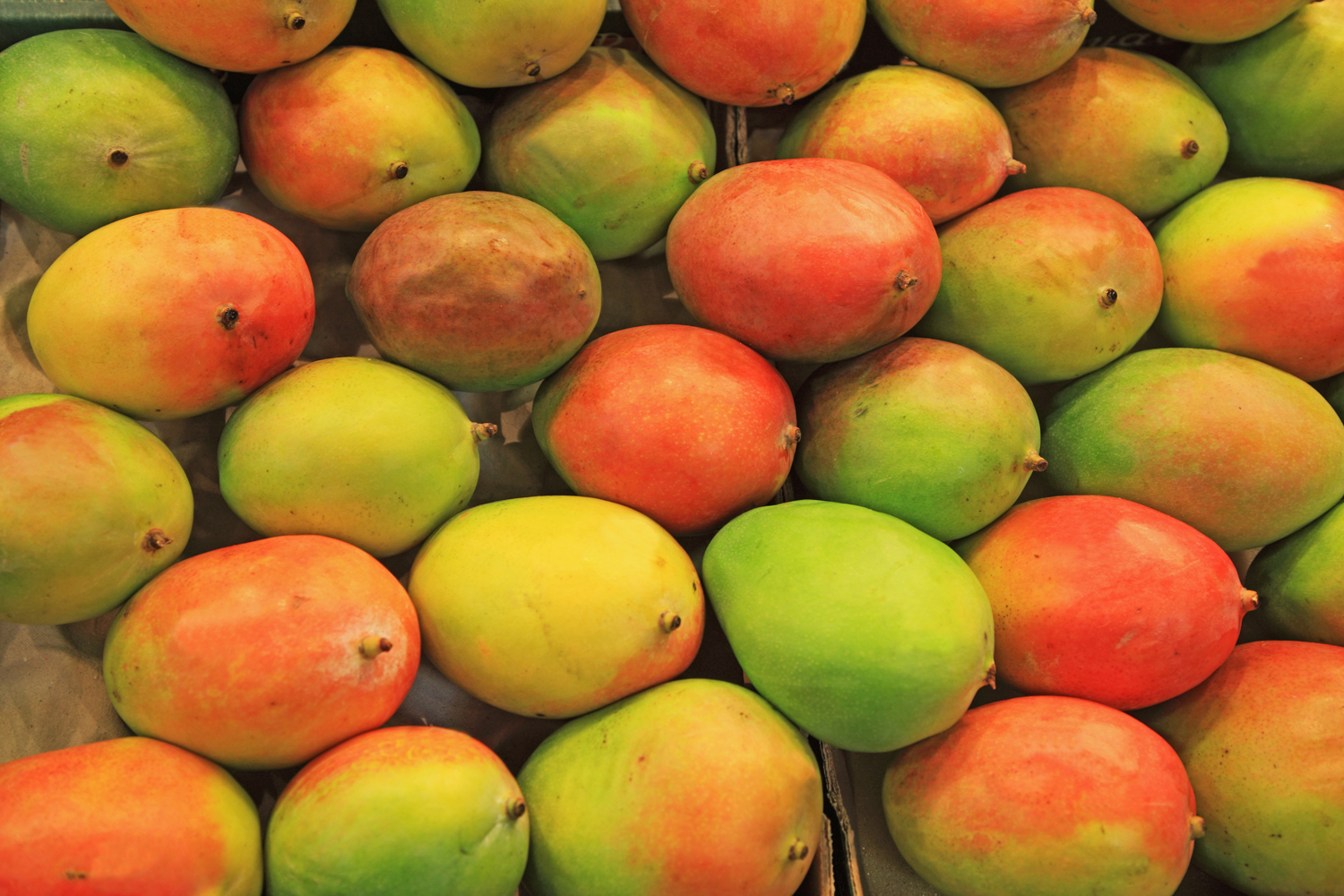
Mangoes
A colleague at UNISTMO in Tehuantepec told me that there were more than 16 different types of mangoes in Oaxaca alone. I haven’t been able to find a source to back this up, but considering that Oaxaca produces more mangoes than any other state in Mexico, it’s not hard to believe.
The ones I often see are the small yellow local ataufas or the much larger Tommy Atkins variety, which range from green, orange, and deep red. They’re really high in vitamin C and contain minerals like calcium and iron that other fruits don’t often have.
Mangoes are fantastic not only because of the sweet, rich taste and nutritional value but because of all the things you can do with them in the kitchen and workshop.
They work great in smoothies, pancakes, and salads just to name a few. More ambitious crafters use the creamy texture in cosmetics like creams and shampoos.
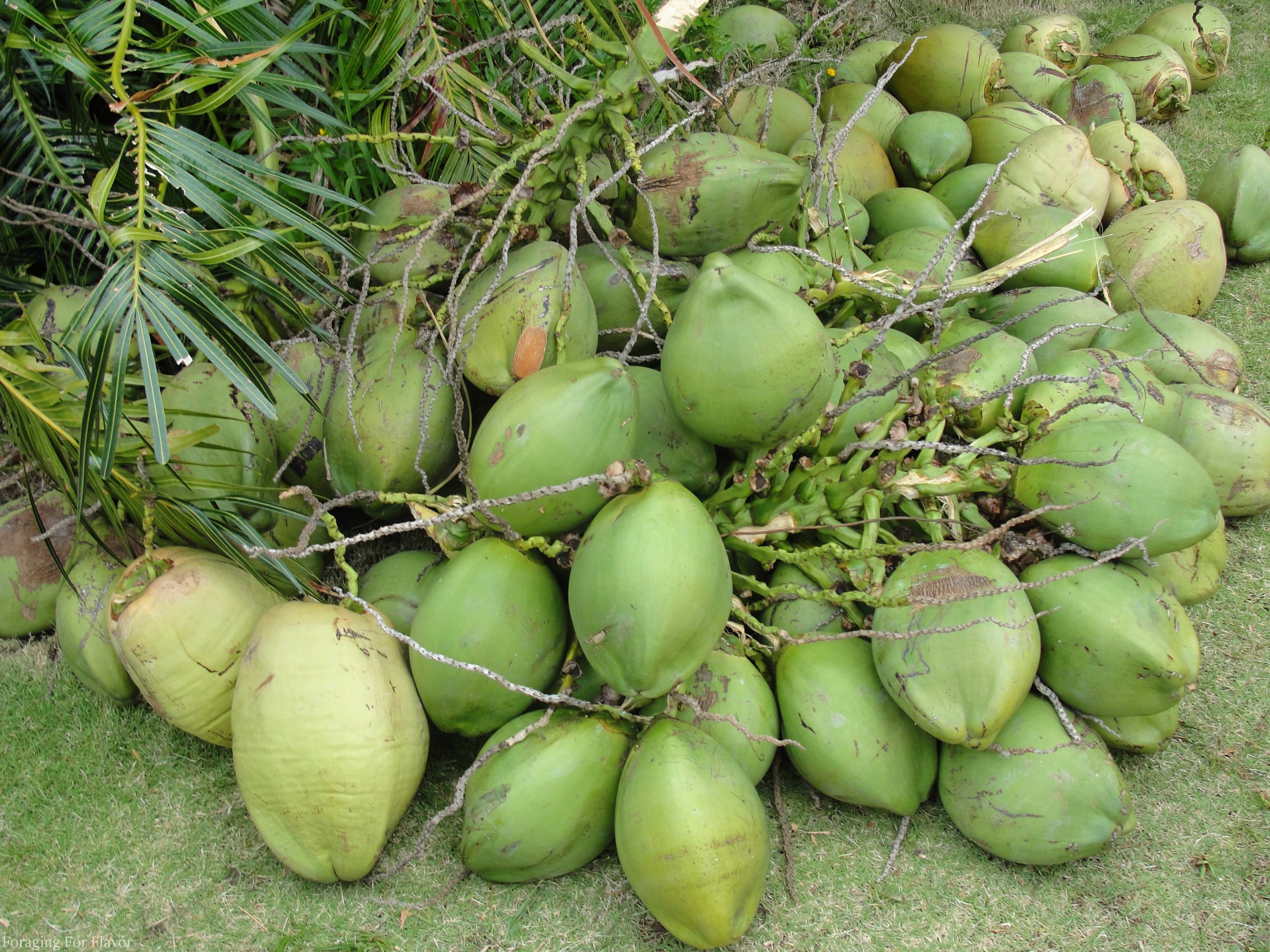
Coconuts
Another food that can also be a million other things. Besides just being great fun to eat, coconut products have a number of amazing health benefits.
Is it the lightly scented oil that’s great for both your skin, in your smoothie and as a cooking ingredient? Or is it the refreshing water that seems to stay colder longer than water? Could it be it the husk, which you can use to build furniture, make jewlery or keep your beach campfire going?
Apparently, you can eat the tender white flesh on the inside, too.
Yes, coconuts contain a lot of fat. Deal with it.
Tamarind
Here’s one you don’t know. It’s a bean that grows in a seed pod from a tree and has to be prepared by being soaked or ground up before you mix it with water or sauce.
Tamarind is also common in India and Southeast Asia. The tart but sweet taste and fibrous texture of tamarind remind me of rhubarb and it has many of the same uses.
That taste comes from the abundant tartaric acid and an indication of the strong antioxidant properties. Then there are the high levels of vitamin A and C, and minerals like calcium and iron. It’s one of the common “aguas fresca” flavors and is commonly used to make sweets, snacks, spreads and pastry filling.
Jamaica
Here’s one you know, except that you don’t. But you do.
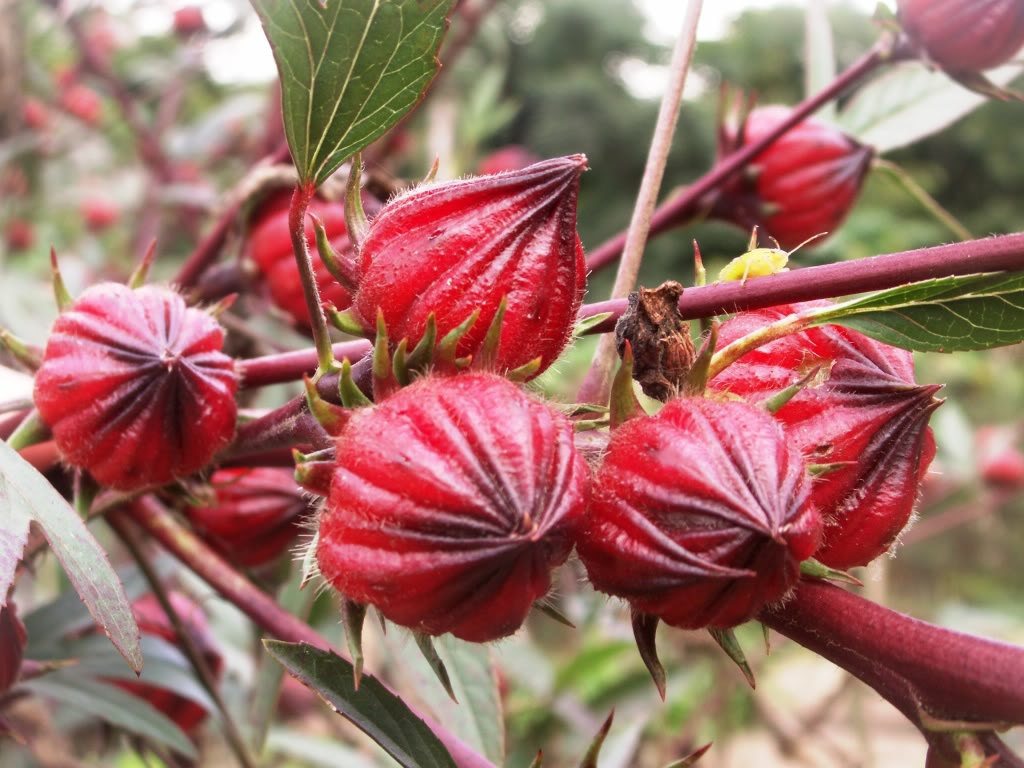
This is not the Caribbean nation that gave us Bob Marley and Grace Jones. This is the name of a herb that comes from a flower, and it’s pronounced “ha-my-kah.” Or you can use the word you’re familiar with; hibiscus.
Hibiscus tea is fairly common throughout the world, but there is a myriad of other things you can do with the dried pods and flowers.
Jamaica resembles cranberry in color and taste and has many of the same health benefits, but I find that it’s not as bitter. It’s got those good citric and tartaric acids and is used to regulate cholesterol and blood pressure.
I’ll keep posting these as I discover them. I originally wanted to add nopal, but then I thought it would be better to do a whole other post on cacti and related plants like aloe vera and different types of agave.
The featured image at the top of this article is entitled “desktop-exotic-fruits-and-vegetables-wallpaper” and was taken from http://www.freehdimages.in/wallpaper/desktop-exotic-fruits-and-vegetables-wallpaper/
Remember that scene (skip ahead to 1:01) when the evil Jedi makes Obi-Wan Kenobi eat the poisoned apple because fresh fruit is so delicious that it can ease his physical pain? No? Not part of the official canon anymore, I guess.
Mexico has a number of famous tourist destinations, but there are still many mysterious places off the beaten path that are waiting to be discovered. Zipolite, also nicknamed “the Beach of the Dead” is one of those special places. Get there before the modern world gentrifies it into one of these charming and fashionable “magical towns.”
Zipolite
Playa De Amor and Roca Blanca
Playa Zipolite
Roca Blanca and Palapas, Playa Zipolite
There are probably thousands of beaches in Mexico, but this is the only one in the entire country where nudity is permitted and cannabis is openly smoked by both locals and tourists. Local vendors sell a wide variety of curiosities and handmade treasures. Buy crystals and glass pipes, get a henna tattoo, or indulge in a massage with scented oils. The nightlife is more than decent considering the size of Zipolite, and clubs and bars have names like “El Hongo” (the mushroom). The legacy of the first hippy tourists is alive and well between Playa de Amor and Roca Blanca.
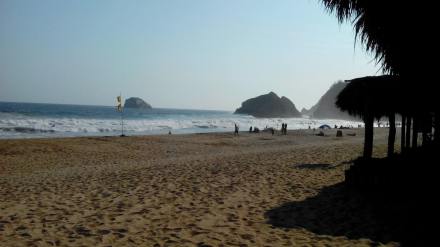
Zipolite is not a big place, but the beach itself is vast and open, clearly marked by Roca Blanca in the west and Playa de Amor in the east. Roca Blanca simply means “white rock” and that’s exactly what you will see on the north end of the beach. This is a haven for seabirds and they’ve branded their personal space in their own distinctive way. Most of the shops, stores, tour guides, bike rentals, transportation, paved roads and other amenities are on the Roca Blanca side of Zipolite. Closer to Playa Amor you’ll find a quieter neighborhood with a soccer field, a quaint seaside church, and a children’s playground along with a few small shops and a relatively peaceful residential neighborhood.
Playa de Amor is the small, sheltered alcove at the very end of the beach on the eastern side. You have to climb a steep stairway to get there but it’s not a long one. In the high season, there’s a small restaurant perched on the top of this rocky outcropping where the stairway dips back down towards the ocean. This tiny beach is hidden in a little cove between two steep hills. There are actually two or three secret little beaches near this spot, and rip tides here are virtually non-existent, so it’s a nice place to safely swim. The rest of the beach is marked with yellow or red flags to denote safe swimming spots. The undertow is no joke and will often shift with the tides, winds, or time of day. Enjoy the ocean but be confident in your swimming skills, listen to the lifeguards, and bring a friend.
The End of the World
The southern coast of Oaxaca was virtually untouched by tourism as late as the 1960s, when the first hippies headed south looking for a counterculture haven. They found it here, on a pristine beach that had neither bank, cop shop nor boat launch.
The name, Zipolite comes from the local indigenous Mixtec language and has two possible meanings. The first, which has become a part of the local urban legend and the area’s nickname, is “the Beach of the Dead.” The beach is uncrowded and virtually free of boats because of the dangerous and unpredictable rip tides that make navigation difficult and swimming dangerous. The second meaning, considerably less romantic and therefore likely more accurate, is simply “the place of many hills.” The latter is also accurate and makes for some inexpensive lodgings that still have a first-class view.
The geography of the area, including the ocean itself, also contributes to the ethereal feel Zipolite seems to have. Unlike the beaches to the north, which face west across the Pacific Ocean, Zipolite faces south. To head straight out from Zipolite would take you not to Hawaii, Asia or New Zealand, but to a vast expanse of virtually nothing, at least until the wastes of Antarctica.
The locals share all kinds of stories about the ancient history of the beach and those that were fortunate enough to find it before the days of highways and airplanes. One tall tale is about the ancient Nahuatl people. They were aware of this isolation on some level and would come here to offer sacrifices to the gods of the dead that lived past the end of the world. How true that may be has been long lost in the riptides of time.
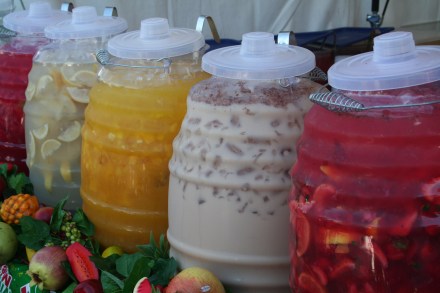
My Easter Season started a few weeks ago. On March 9th, I came to school for class and was pleasantly surprised to find that the regular schedule was suspended to celebrate the Festival of Saint Photina. The students had mixed a few big batches of “flavoured water” (also called “aguas frescas” in other parts of Mexico) which they were serving to the teachers and younger students from the Primary and Kindergarten side.
There were some really nice varieties, including classic favorites like pepino-limon and jamaica along with several creative horchatas. I think it was still the usual rice base but it included papaya and walnut, too. After the teachers and younger students had been served, the students moved the large tubs to the entrance of the school and served free refreshments to passers-by.
Eventually I asked another teacher if there was any deeper meaning behind all this sitting in the shade and enjoying cool drinks when we should be working. It turns out there is.
The original aqua fresca.
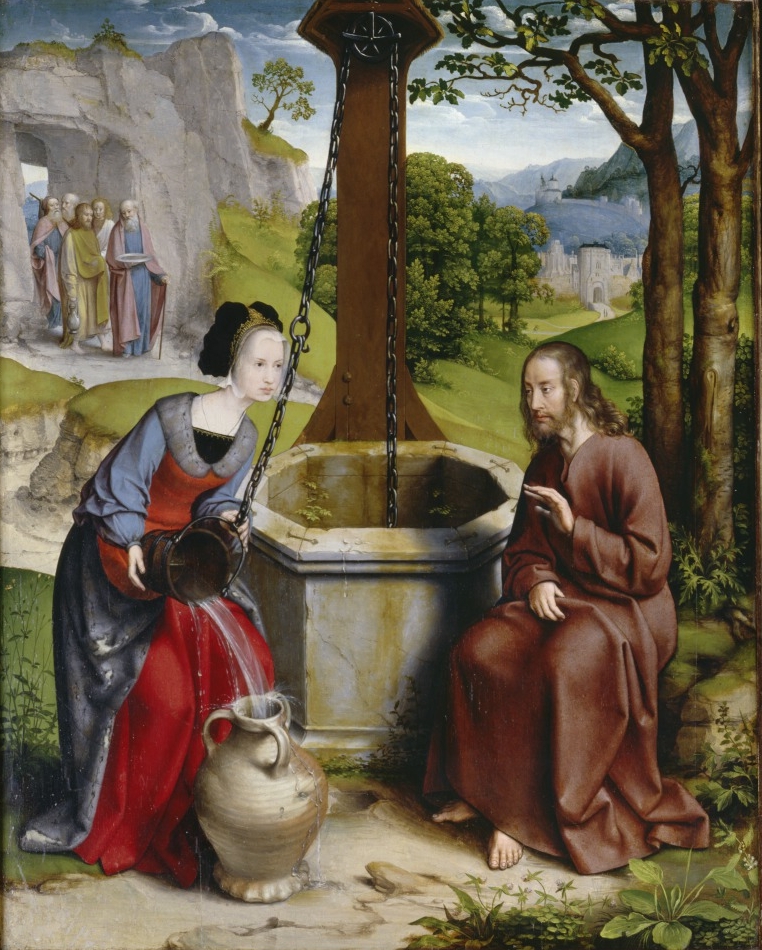
Every Friday that is part of Lent has a special meaning, especially in Oaxaca. This Friday March 9th we were celebrating Saint Photina. This festival is unique to the state and not commonly observed in other parts of Mexico. She met Jesus at a well during his journey to Jerusalem, and according to the Gospel of John, the two had an honest and intellectual discussion about spirituality and thirst after she helped him draw some cool drinking water from the dangerously deep well.
Then she converted to Christianity. Not only that, she converted her sons and the whole family went on to travel the world as evangelists before being martyred in Carthage. Legend has it they threw her into a well, a great example of an ending that would never work if you tried to include it in a fictional story, which leads me to believe it might have actually happened. And Christianity is all about how many people you convert and how painfully you die, so she’s pretty important.
Aside from being the inspiration for our school party, Photina is an important figure in Eastern Orthodox Christianity and Asian feminist theology. If you’ve ever met a “Svetlana” you’ve met someone who was named for this saint.
Our students were essentially recreating the meeting of Jesus and Photina. Some of the lessons learned during these non-class hours include welcoming strangers, sharing what you have, and being hospitable and friendly in general.
This is a proposal I’m working on for what will eventually be a series of travel books. I’ll add more as I continue, but it may be convoluted or seems disorganized. A work in progress! Please comment as to what you think, it will help me polish the details. Cheers!
Travel books are usually written to encompass the bigger picture. These ones, however, are different. They take the big world and focus on a small piece of it – a microcosm – to share and enjoy. These books were inspired by a relatively small stretch of paradise called La Playa Chica (”the small beach” in Spanish) on the southern coast of the Mexican state of Oaxaca. Development here has happened relatively late and slowly compared to other parts of Mexico and information on the area is still rather obscure. The Playa Chica stretches south from the city of Puerto Escondido and turns east before ending in the resort town of Huatulco. You could drive past it in two or three hours on a narrow, winding highway through the hills and never know the little world that you missed.
This is not to say that La Playa Chica has not been written about at all. The area is too small to be extensively covered in most travel books, and smaller books that focus on this area do not include information about local transit options. Most of the information that is most sought after in conventional travel books can be easily found using Google or a related smartphone application. “Microcosms” not only contains information that is not readily available in print but can appeal to a wider readership given its structure and focus. The basic layout is fundamentally different, rejecting the conventional table of contents and scale maps.
After two sections in which a brief introduction to the area and the transportation options are covered, the reader will be presented with a chart that can be used to find specific points of interest in each small city. Sections that include details about accommodations or restaurants contain only general information and are not specific. Transportation options between the small beaches are the most difficult information to find. Not only does it vary depending on the season but it can change arbitrarily and does not exist in print or online. Information about local transport is included in the introduction and on the maps.
City
Accommodation
Tourist Attractions
The Beach
Special Interest
Shopping
Huatulco
x
x
x
x
x
Puerto Angel
x
x
x
x
x
Zipolite
x
x
x
x
x
Mazunte
x
x
x
x
x
This is a relatively small area, so information about transportation is uniform and contained in a separate section at the beginning of the book, along with a small collection of maps. This allows the reader to find exactly what they-re looking for without flipping through pages of hotel and restaurant listings.
Accommodation: doesn’t contain specific information *names, phone numbers, etc* but general information regarding location, amenities, and prices*
Tourist Attractions: some attractions, like ruins and museums, will have specific information regarding location and contact information, but there are few in the area.
The Beach: this is the main attraction for locals and visitors alike. As there are so many, this will be a mix of specific and general information that will also include comments and observations about cleanliness, accessibility, amenities, and activities.
Special Interest: this information is given in a more specific manner. If you come to the Playa Chica looking for natural cosmetics, yoga classes, spas, ethnic food or ecotourism, this is your section.
Shopping: this section is organized by items and categories and location but not by price, as this varies widely. There are general categories (jewelry, beach accessories, clothing) and specific items (organic spices, traditional embroidery, natural cosmetics).
The books focus on local transit, commuter bus routes, and other local secrets. Distances are noted but the maps themselves are not drawn to scale. Almost everything is within walking distance of transit hubs, making these books ideal for budget travelers or local people who have no use for information about resorts, airlines or guided tours. Continuing with the theme of practical and efficient use, the book is also designed to be small and accessible. It should not take up a lot of room in a small backpack or be awkward to flip through when on a crowded bus.







 Cristina in Oaxaca